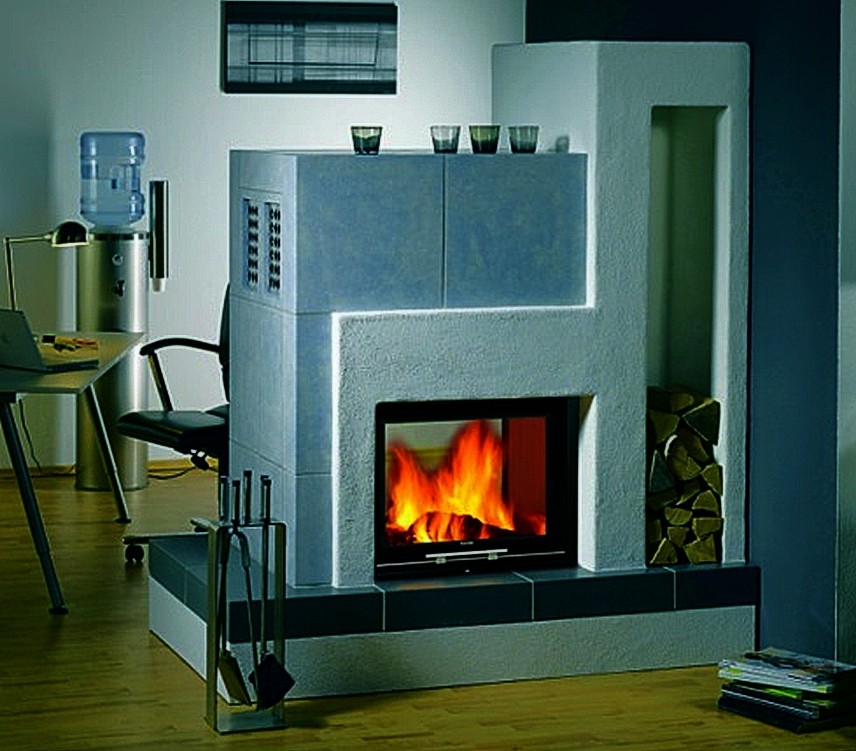
Modern wood-burning stoves have to combine efficient combustion with low emissions and effective heat transfer to the room. Their performance is governed by the interaction between combustion-air supply, fuel conversion, flue-gas flow and the thermal behaviour of the stove.
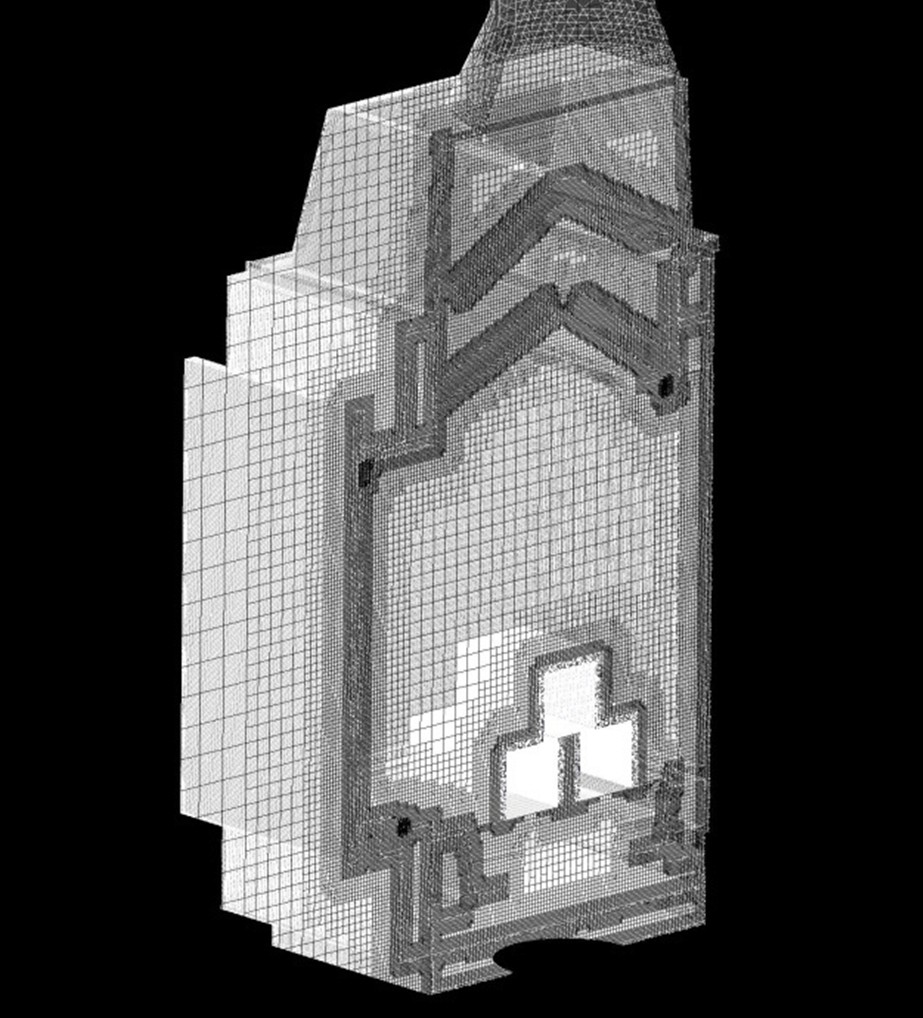
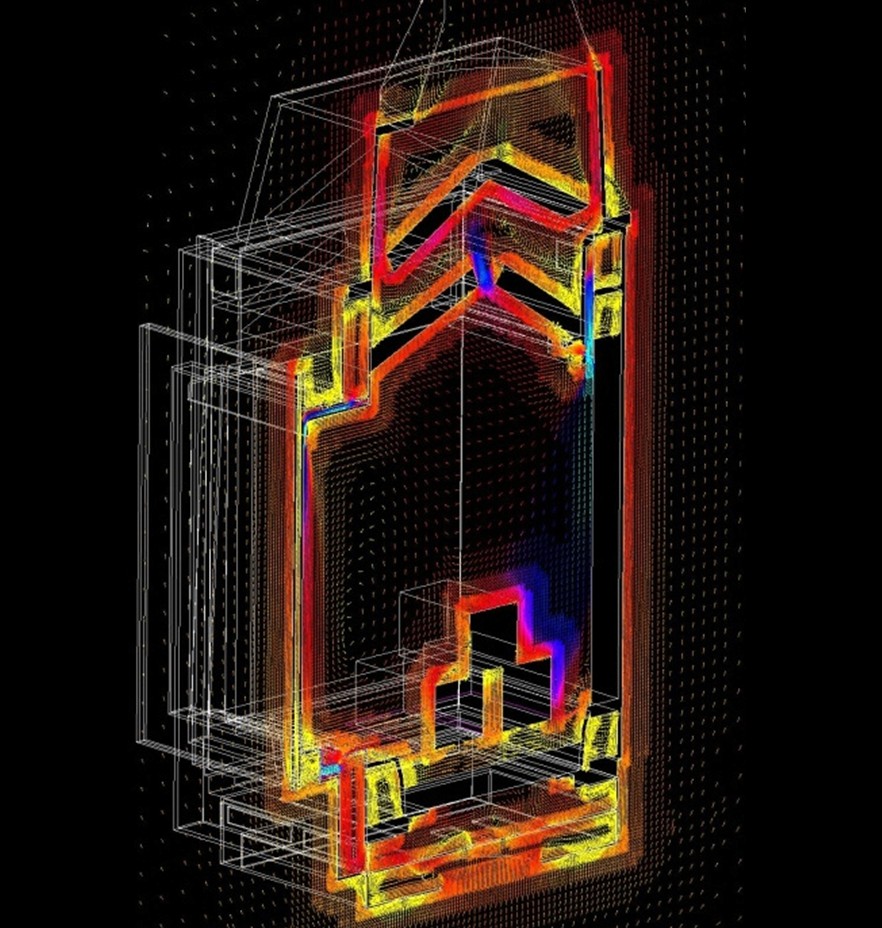
FlowMotion used CFD to analyse the flow, combustion and heat transfer inside a wood-burning stove. The simulations showed how primary and secondary combustion air mixed with the combustible gases and how the resulting hot gases moved through the combustion chamber.
The thermal calculation included the relevant heat-transfer mechanisms. Convection transports energy with the flue gases, conduction transfers heat through the stove walls and thermal radiation is particularly important at the high temperatures inside the combustion chamber.
Temperature-dependent density differences also generate buoyancy forces and natural convection, which interact with the chimney draft. By analysing these coupled processes, design modifications could be assessed for their effect on combustion quality, emissions and heat transfer.