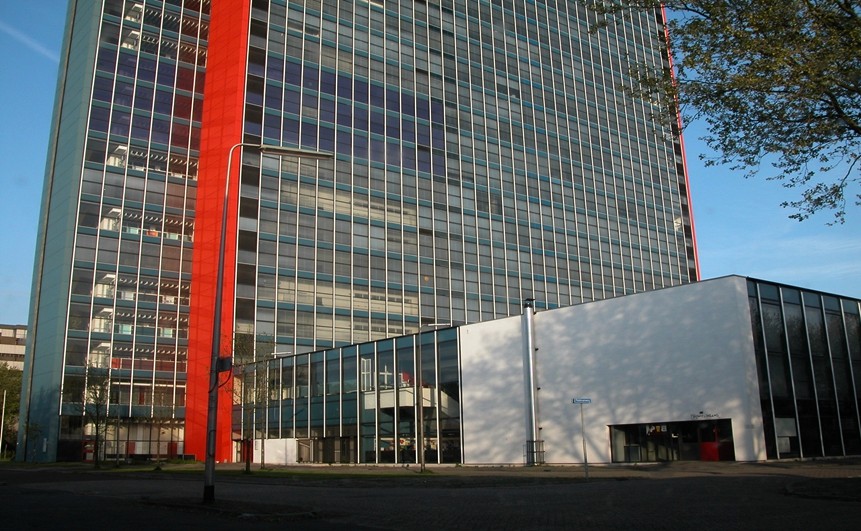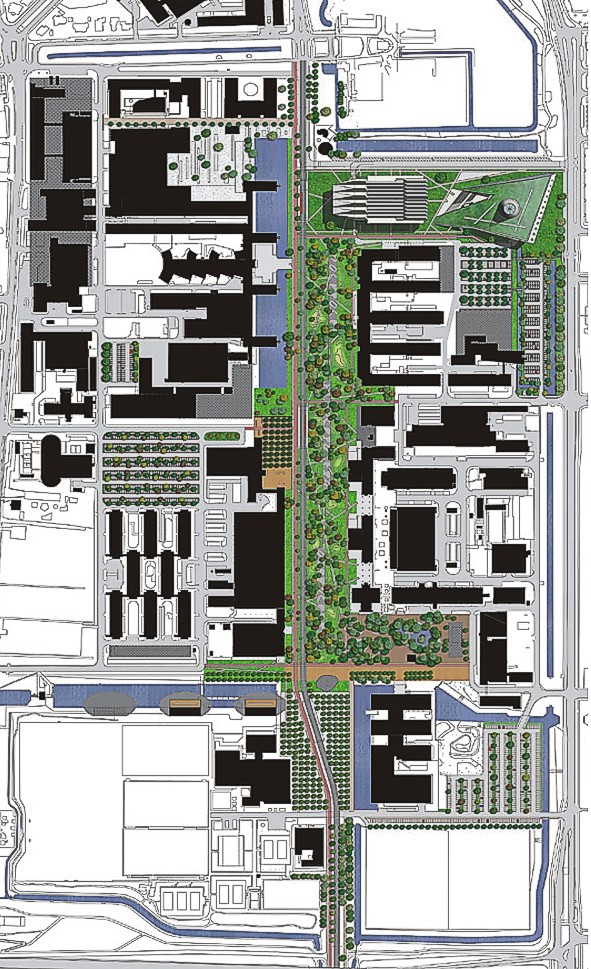
As part of the redevelopment of the TU Delft campus, a park-like environment was created along Mekelweg. An important element of the design was a tram stop close to the Electrical Engineering building. Because of the height and shape of this building, high local wind velocities were known to occur in the surrounding area.
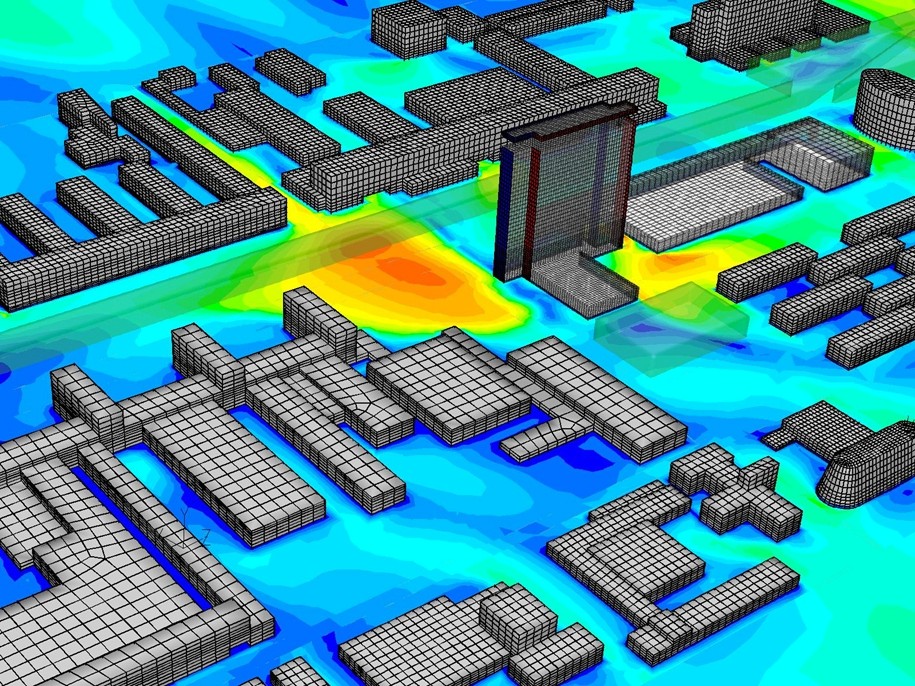
To assess the wind conditions in the future park and around the tram stop, FlowMotion was commissioned to investigate the external airflow around the building using CFD. A three-dimensional computational model of the area was constructed from drawings, models and photographs.
The effect of the existing trees on the airflow was represented using porous zones. An atmospheric boundary-layer profile was prescribed at the boundaries of the computational domain so that the vertical wind-speed distribution represented the outdoor flow. The local velocity distribution was then calculated for twelve different wind directions.
The simulations showed that high local velocities at pedestrian level could occur particularly when the wind approached the building almost head-on. An important mechanism was downward deflection of the airflow along the façade: air from higher levels was transported towards ground level and accelerated locally around the building.
Based on the calculated flow fields, Mecanoo, Vastgoed BV Delft and FlowMotion developed measures to reduce local wind nuisance. These measures could subsequently be evaluated using additional CFD simulations.