Wastewater can contain a substantial amount of recoverable thermal energy. Extracting this heat is attractive, but conventional heat exchangers can suffer from fouling when solids or other contaminants accumulate on heat-transfer surfaces.
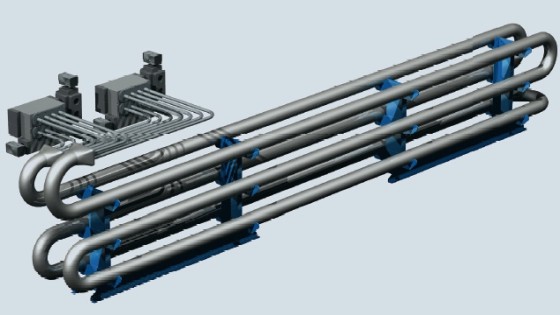
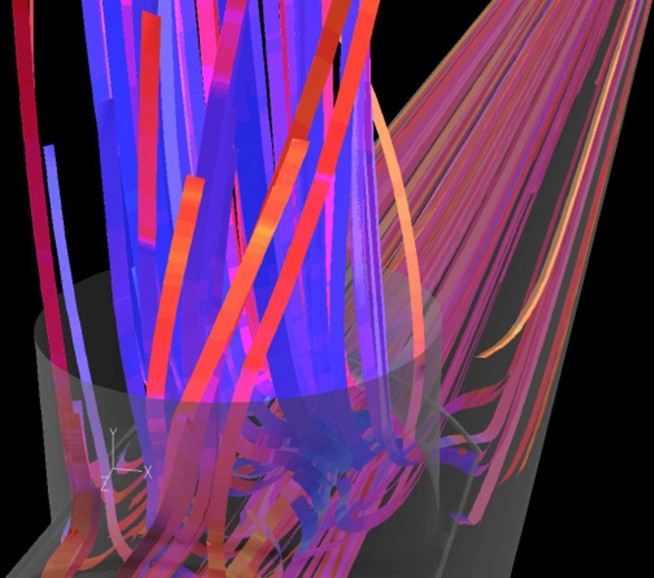
FlowMotion analysed a self-cleaning heat-exchanger concept intended for wastewater applications. CFD was used to calculate the internal flow distribution, pressure loss and heat transfer through the exchanger.
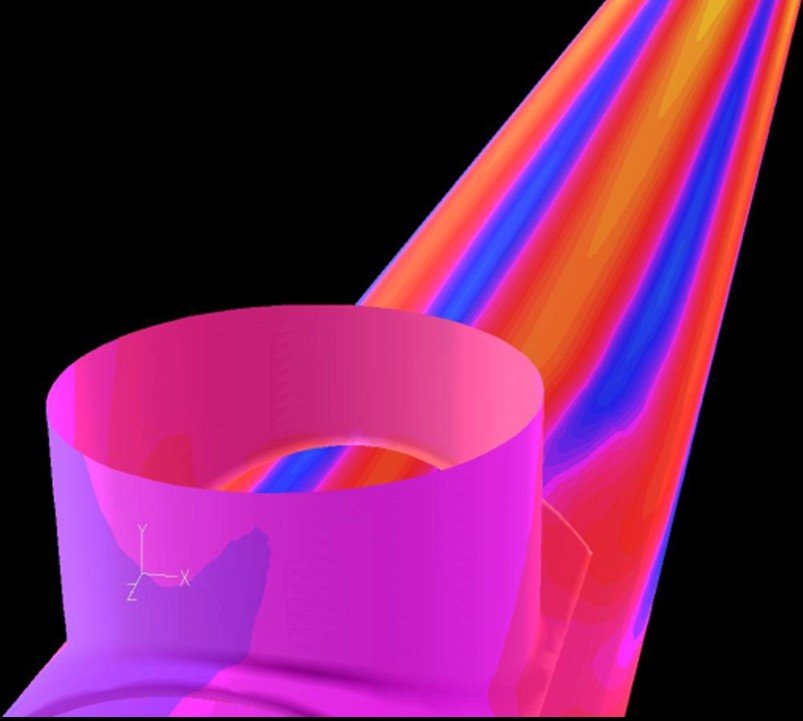
The local velocity and wall shear stress are important for the self-cleaning behaviour because regions with weak flow can be more susceptible to deposition. At the same time, the geometry must provide sufficient heat-transfer area without creating an excessive pressure drop.
The simulations made it possible to assess these competing requirements together. Different geometric configurations could be compared using local velocities, pressure distribution, wall shear and thermal performance.
This provided a basis for improving both heat recovery and the hydraulic behaviour of the self-cleaning exchanger.