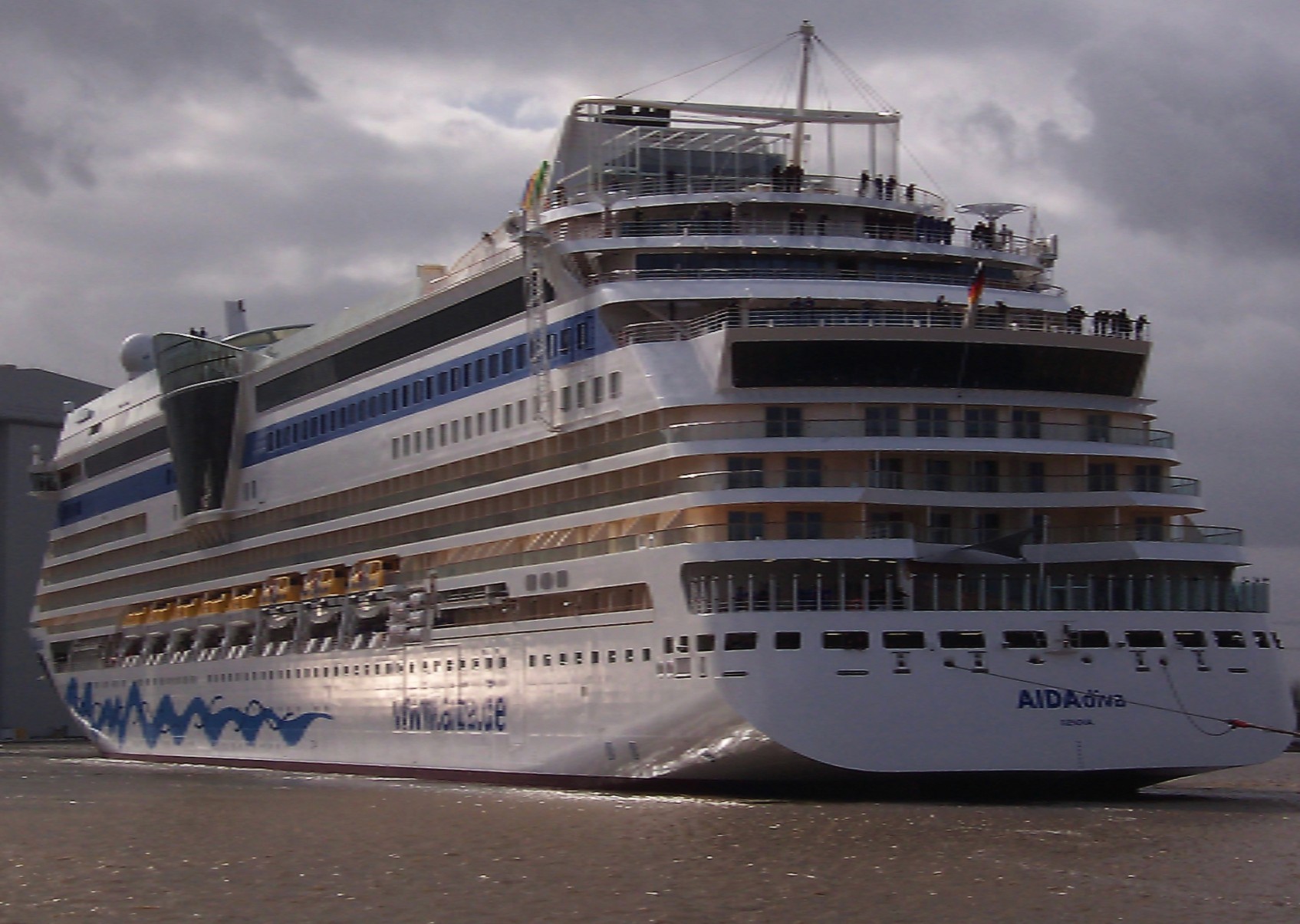
To ensure maximum comfort and safety for passengers on a cruise ship, not only the areas visible to passengers but also all essential technical components are planned with the utmost care.
One of the most critical areas of a ship is the engine room. To dissipate the massive amounts of heat generated by engines, heating systems, water treatment plants, and much more, numerous fans and large ventilation pipes and shafts are required. In addition to providing adequate ventilation, the system must also ensure the engine room is kept under slight negative pressure to prevent air from escaping. Furthermore, planning these ventilation systems is complicated by the need to occupy minimal space to allow for the commercial use of areas for additional cabins.
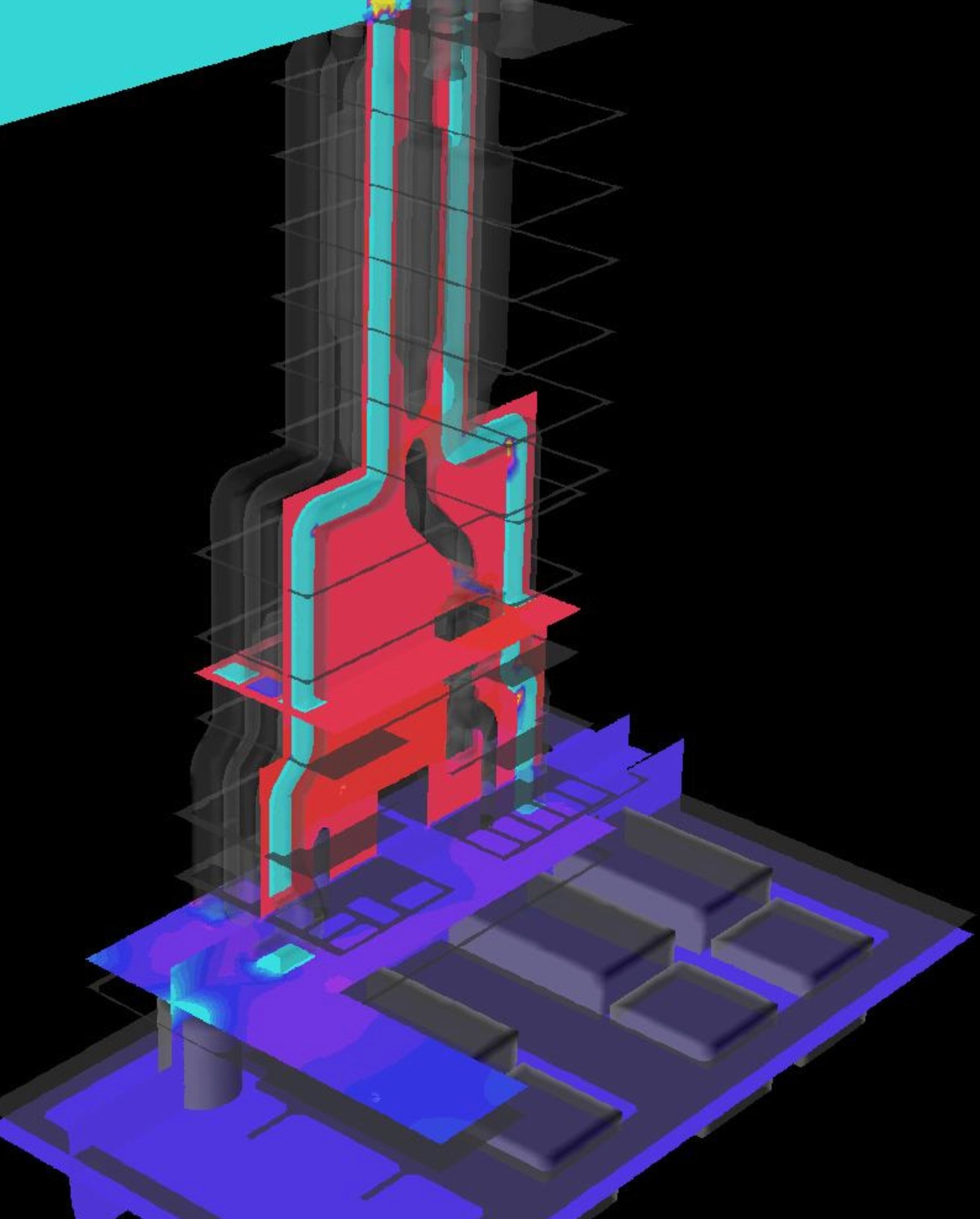
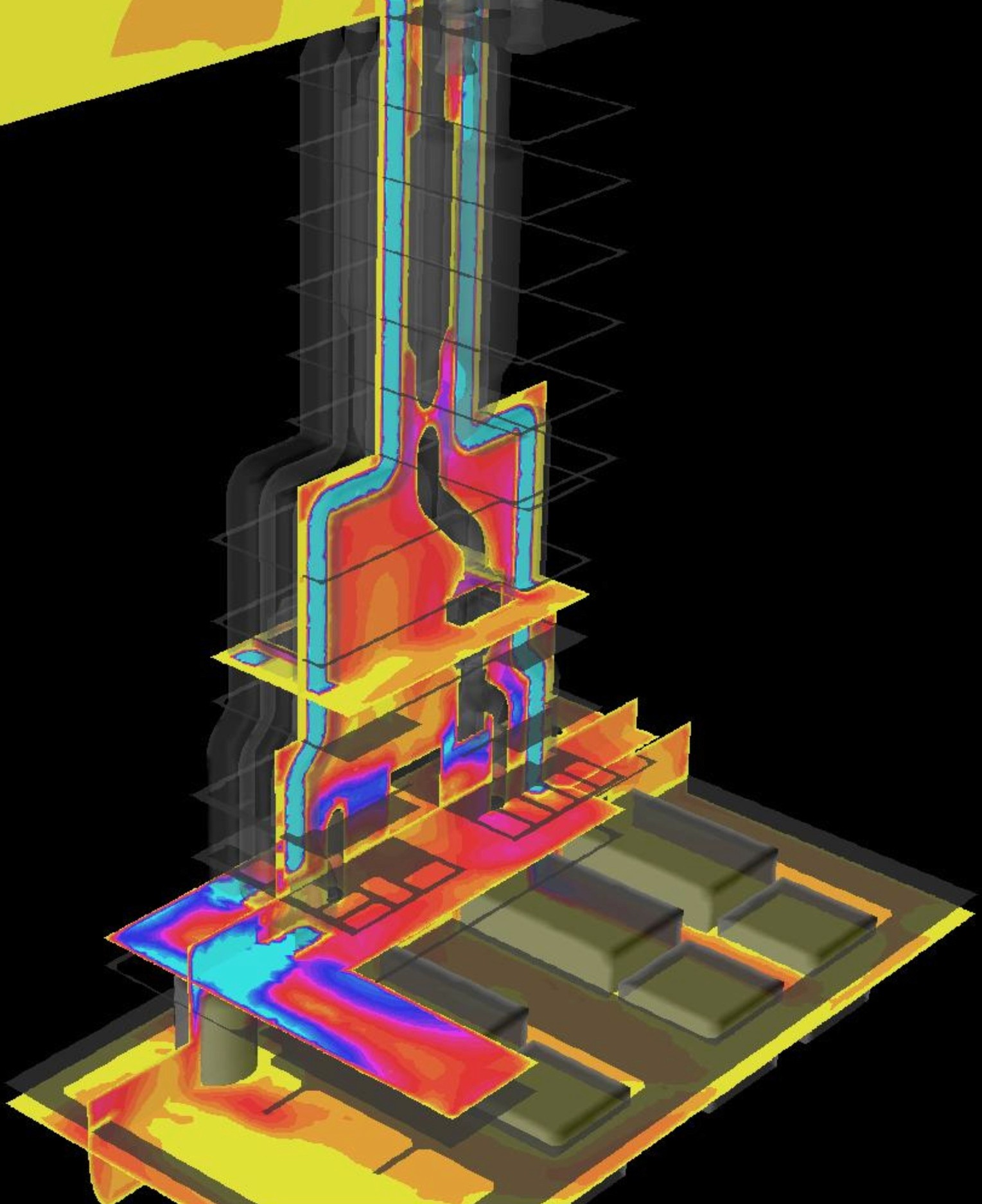
For a latest-generation ship, a new ventilation concept was to be verified for its intended functionality during the planning phase. FlowMotion was commissioned to simulate the airflow of the entire engine room ventilation system. To achieve this, the complete piping system across all decks, up to the funnel, and all fans were mapped in 3D.
Using the results of the Computational Fluid Dynamics (CFD) simulations, parameters including velocity, temperature, and pressure were calculated for the engine room, shafts, and ducts. The results demonstrated that the ventilation operates exactly as intended by the planners, thereby securing the comfort and safety of the passengers.