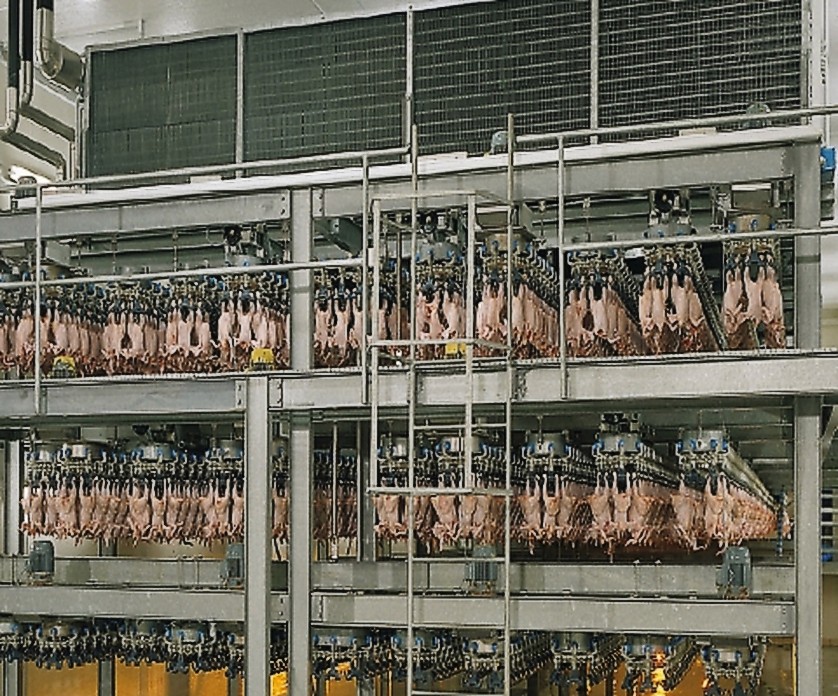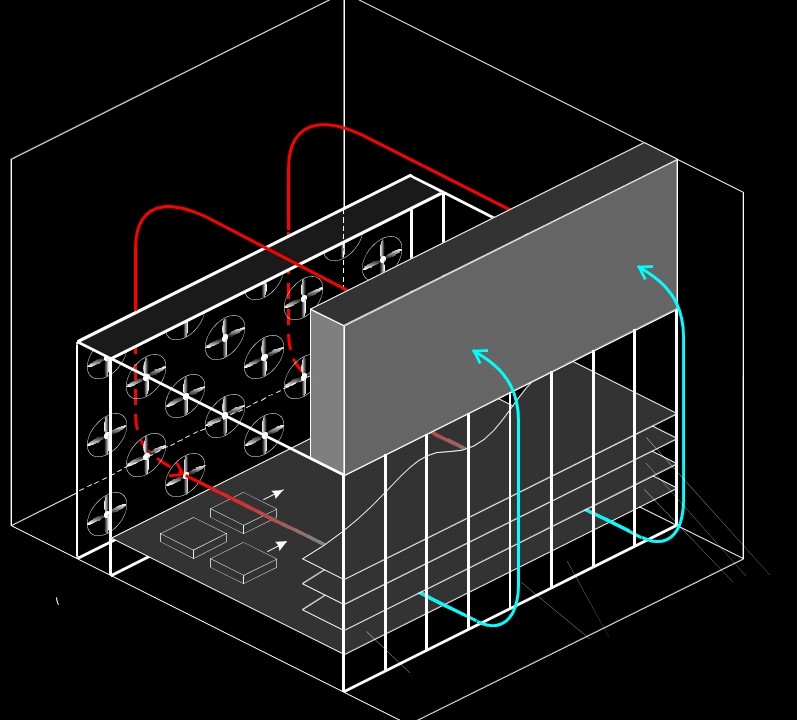
A typical cold storage facility in the meat processing industry consists of a system where products are transported through a hall via conveyor belts. A multitude of fans ensures air circulation, and corresponding heat exchangers maintain the air in the hall at the desired temperature level. The velocity of the airflow around the products, which can be horizontal or vertical depending on the application, combined with the air temperature, determines the retention time of the products in the hall and thus the production capacity.
One of the approaches used to plan and design cold or freezer stores is based on calculating the time required to reach a specific core temperature of the product. This calculation assumes a minimum air velocity, based on the premise that this velocity is constant along all products.
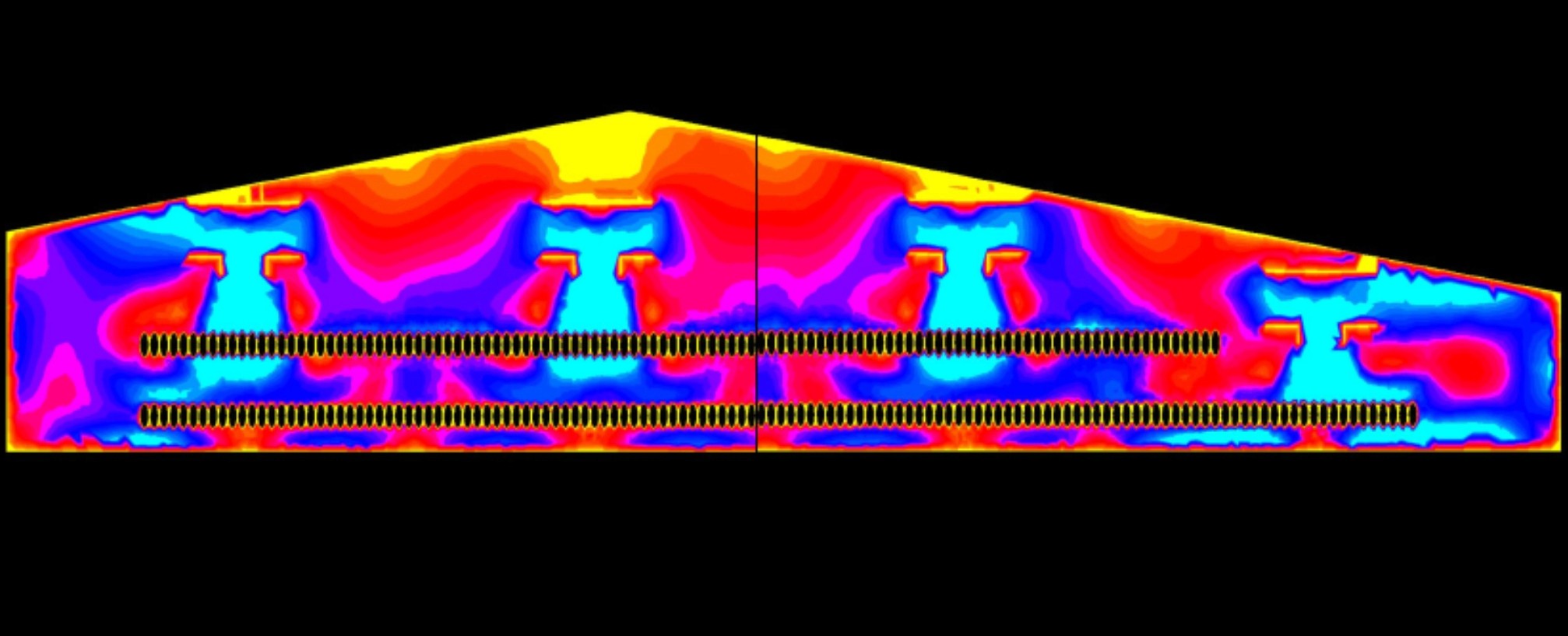
FlowMotion has verified this assumption both theoretically and experimentally. To this end, air velocities were measured throughout the cold store during operation. The measurements revealed that the assumption that air velocity along the products is constant does not hold in practice, which in extreme cases can lead to some products not reaching the desired core temperature.
In order to analyse the influence of potential changes to the existing system on airflow during the planning phase, various configurations were tested using computer-based Computational Fluid Dynamics (CFD) simulations.
These simulations showed that the velocity could be significantly homogenised through the optimised positioning of internal installations and the corresponding shaping of the hall itself. With this knowledge of flow processes in cold and freezer stores, the planning and design process can be significantly improved, resulting in new opportunities to reduce the investment and operating costs of such facilities.