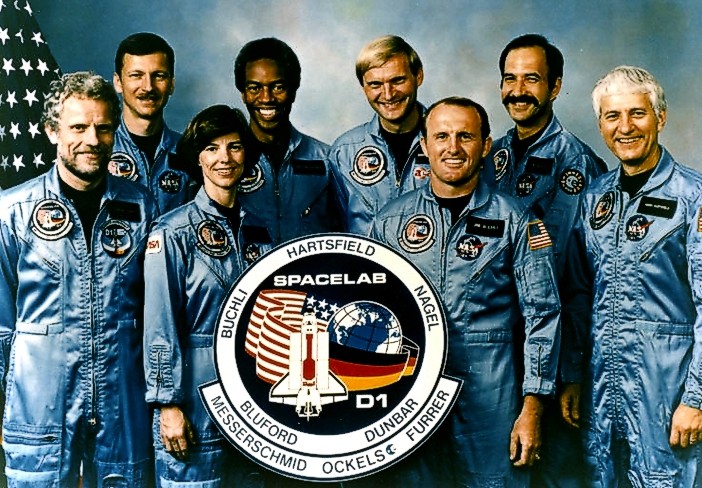
Prof. Wubbo Ockels, a member of the astronaut team for the European D1 mission in 1985, was globally renowned for his extraordinary projects in the fields of renewable energy and transport systems. These include: NUNA (solar-powered racing car, World Solar Challenge), SUPERBUS (coach at 250 km/h), ECOLUTION (0% emission ship), and LADDERMILL.
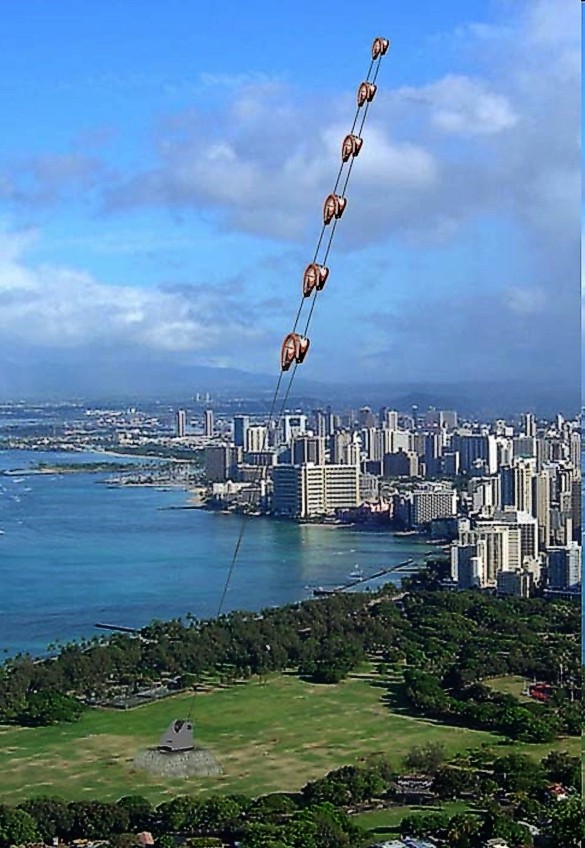
The basic concept of the LADDERMILL project was to set a closed cable loop, to which kites are attached one after another, into motion. This movement was intended to drive a generator to produce electricity. Since the LADDERMILL was intended to extend up to a height of 10 km, electrical power outputs of 100 megawatts would theoretically have been possible.
To check the feasibility of such an ambitious project, a multitude of aerodynamic questions had to be answered. For this reason, FlowMotion was engaged to address these questions, which initially related to the forces acting on the kites. These forces were expected to change significantly, as the kites were to generate an upward force on one side of the long loop and a downward force on the other. This was to be achieved through a mechanical construction for changing the angle of attack.
An equally crucial issue was the aerodynamic stability of the kites. Even the slightest lateral movement of the kites could set a free-floating construction of this size into oscillation and jeopardise the safe operation of the plant.
As part of the investigation, FlowMotion analysed a multitude of kite configurations using a wide range of calculation methods. From the data obtained, a configuration was then developed that represented the best compromise between the required specifications for the LADDERMILL project.