Autumn Storms

Wind load analysis for dykes (CFD calculations)

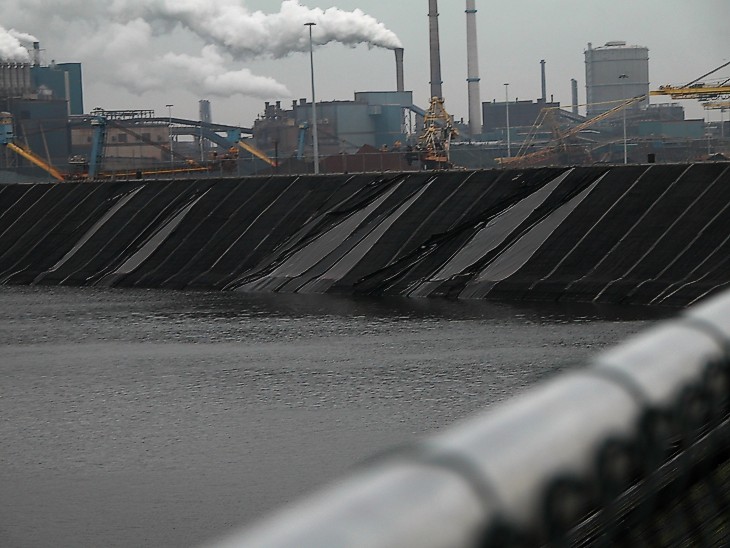
On 27 October 2002, a severe storm swept across the Netherlands, causing widespread damage. At Averijhaven in Wijk aan Zee, heavy 5cm-thick bitumen mats, designed to protect the dyke, were lifted, shifted, and damaged. The necessary repairs proved to be very costly and time-consuming, prompting Rijkswaterstaat to seek solutions to prevent such damage in the future.

As the destruction of the roof-tile-overlapping mats (22m long and 4.5m wide) occurred only locally, local flow phenomena appeared to be the cause. An analysis of wind statistics revealed that these incidents always occurred during increasing winds that shifted to the south-west. However, as wind measurements are only taken every four hours, information regarding the specific temporary gusts responsible was unavailable.

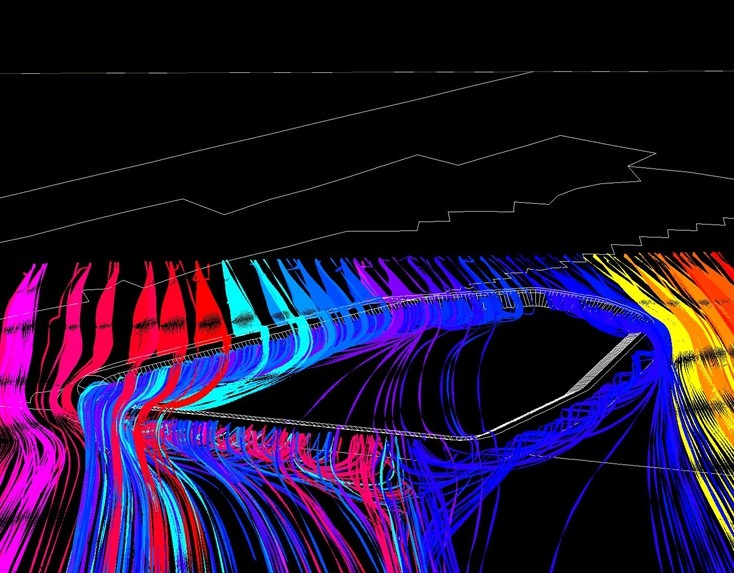
FlowMotion therefore conducted an investigation to examine the flow field across the entire region under various wind conditions. This study aimed to determine the pressure and shear stresses along the mats. Since the actual shifting of the mats was not calculated directly, the resulting pressure and shear stresses from the identified flow field were used to draw conclusions as to why forces sufficient to shift or lift the mats occurred in certain locations.

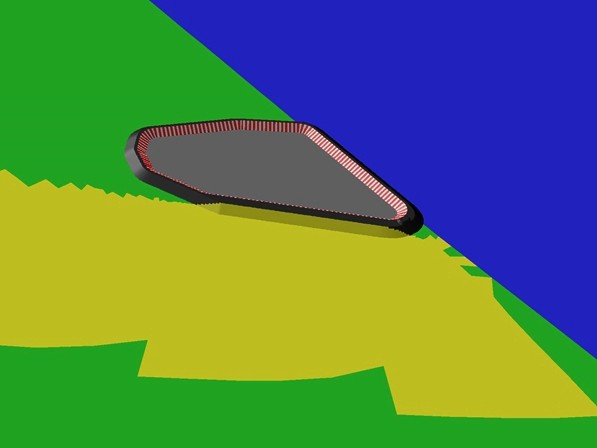
The determination of the flow field and the forces acting on the mats can be performed experimentally in a wind tunnel or through numerical simulations. Due to the urgency, CFD (Computational Fluid Dynamics) simulations were employed. Initially, a computer model of the harbour was created, incorporating various surfaces such as water, dunes, dykes, and the surrounding environment. Additionally, all 314 mats were modelled individually to determine the forces acting on each. To represent the flow field for various wind conditions as realistically as possible, measurements from the Royal Netherlands Meteorological Institute (KNMI) were incorporated into the simulations.

The simulations demonstrated that the resulting forces were insufficient to move the mats in their entirety. Further analysis of the flow field revealed, however, that due to the orientation of the overlapping mats, wind can catch underneath them, causing the corners and sides to fold and eventually initiate movement. Rijkswaterstaat is therefore investigating the possibility of changing the orientation of the mats.

Rijkswaterstaat
Rijkswaterstaat
Rijkswaterstaat