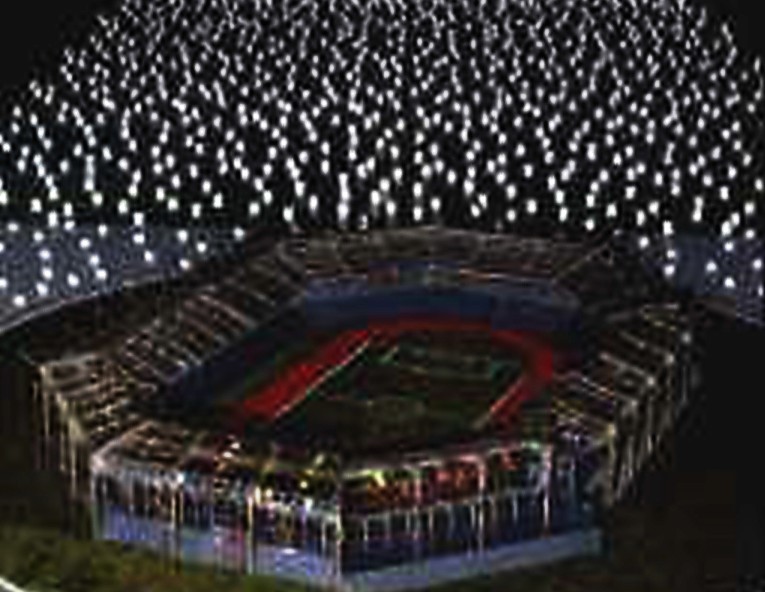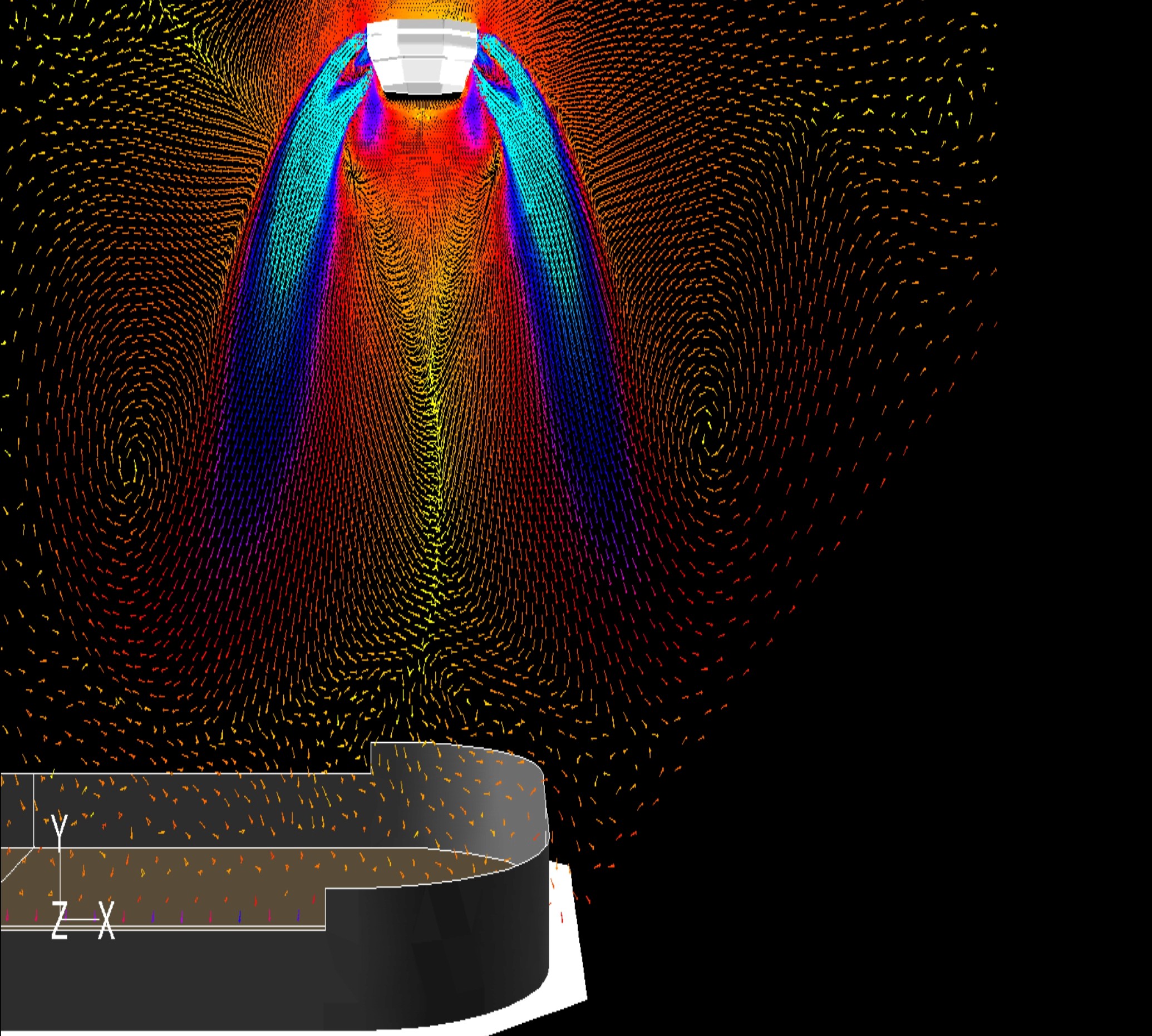
When air-conditioning buildings, a wide variety of requirements must be met. This is particularly true for modern sports arenas, which are used for a multitude of different events. In order to design building air-conditioning systems on a bespoke basis, both the airflow around the exterior of the building and the airflow inside it must be understood during the early planning phase. These air movements are determined either through model tests in wind tunnels or by means of numerical simulations.
In this specific case, the air-conditioning for the new Mannheim Arena was planned for the local ice hockey team. One of the most important requirements in ice rinks is to reduce the probability of fog formation to an absolute minimum.
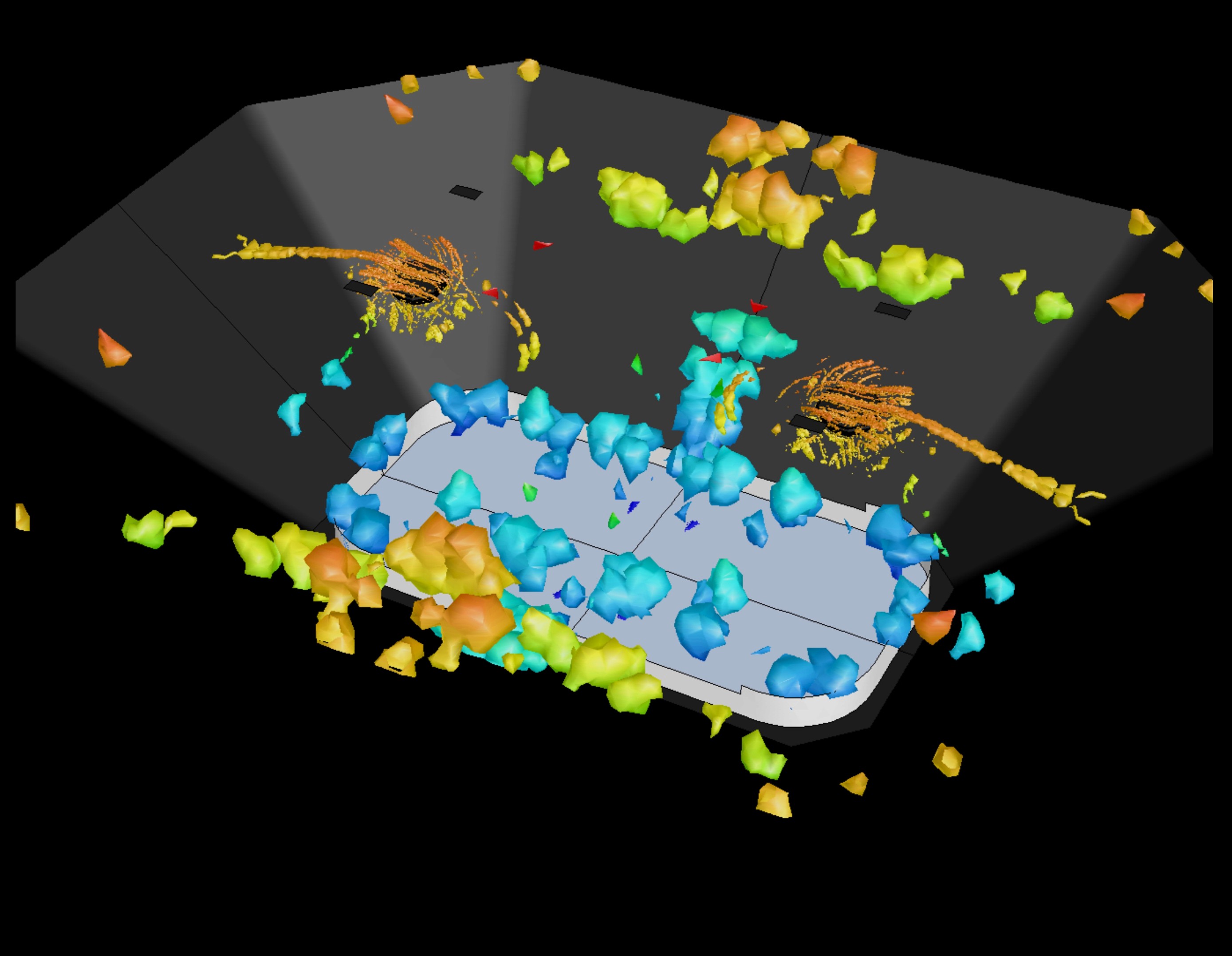
FlowMotion calculated the probability of fog occurring by performing numerical simulations of the entire indoor arena space. Since fog formation depends on local velocity, temperature, pressure, and humidity, all of these variables had to be determined within the simulation. With this vast amount of data, it was finally possible to identify locations with a high probability of fog.
Numerical simulations proved to be a highly efficient tool in this project in several respects. Primarily, all critical flow variables could be determined at any point within the arena, which would only be achievable in a model test at significantly higher cost and time. Secondly, the influence of variations in individual ventilation system components on fog formation could be studied through multiple simulation runs. Such studies during the planning phase help to achieve a high degree of optimisation.