In 2001, a research project was started to reduce overspray drift during painting operations in a shipyard dry dock. The development goals included maintaining painting speed and coating quality while reducing paint consumption, improving working conditions and limiting environmental impact. The new painting technique was initially used in controlled environments such as shipbuilding halls.
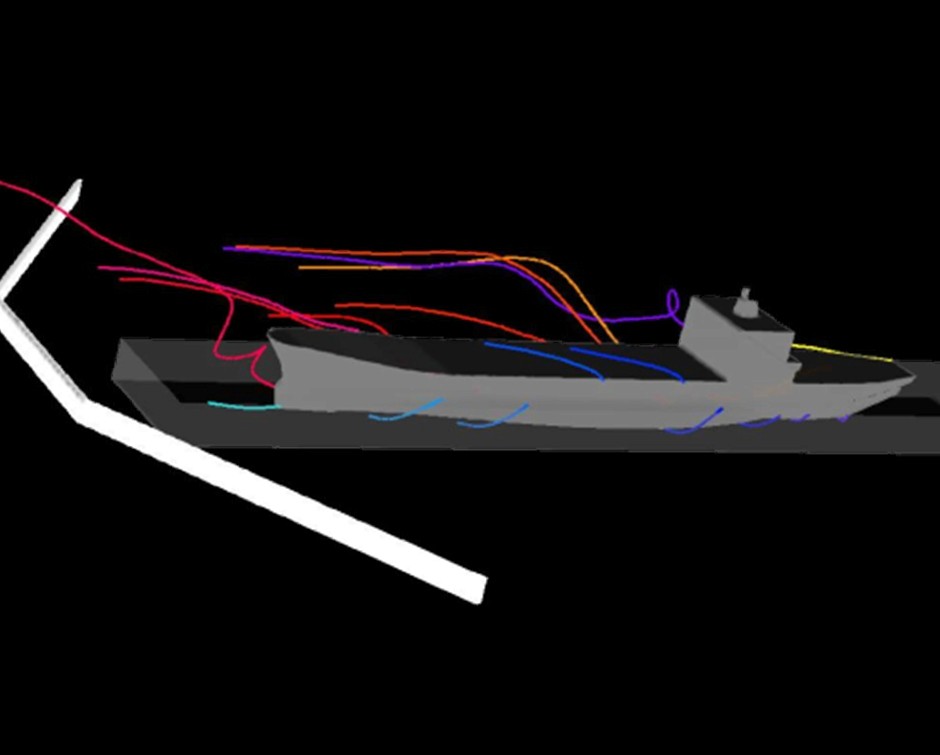
The technique was developed by a project group involving several blasting and corrosion-protection companies together with the Dutch research organisation TNO. Because the system was also intended for use in open dry docks, FlowMotion first investigated the wind flow around a ship in the dock. A subsequent study examined how overspray is transported by this airflow and which measures could reduce its drift.
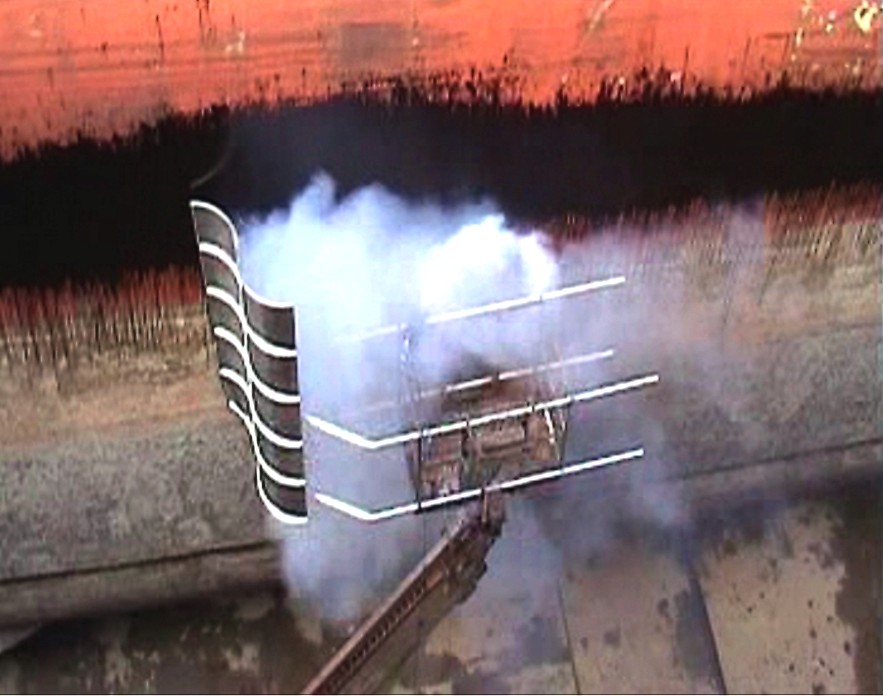
A wind screen on the windward side of the painting platform was identified as a promising solution. Its purpose was to reduce the local wind velocity around the working area and thereby limit wind-driven transport of paint particles. Several concepts were studied to determine the appropriate position, dimensions and shape of the screen. Wind loading on the screen was also an important design parameter.
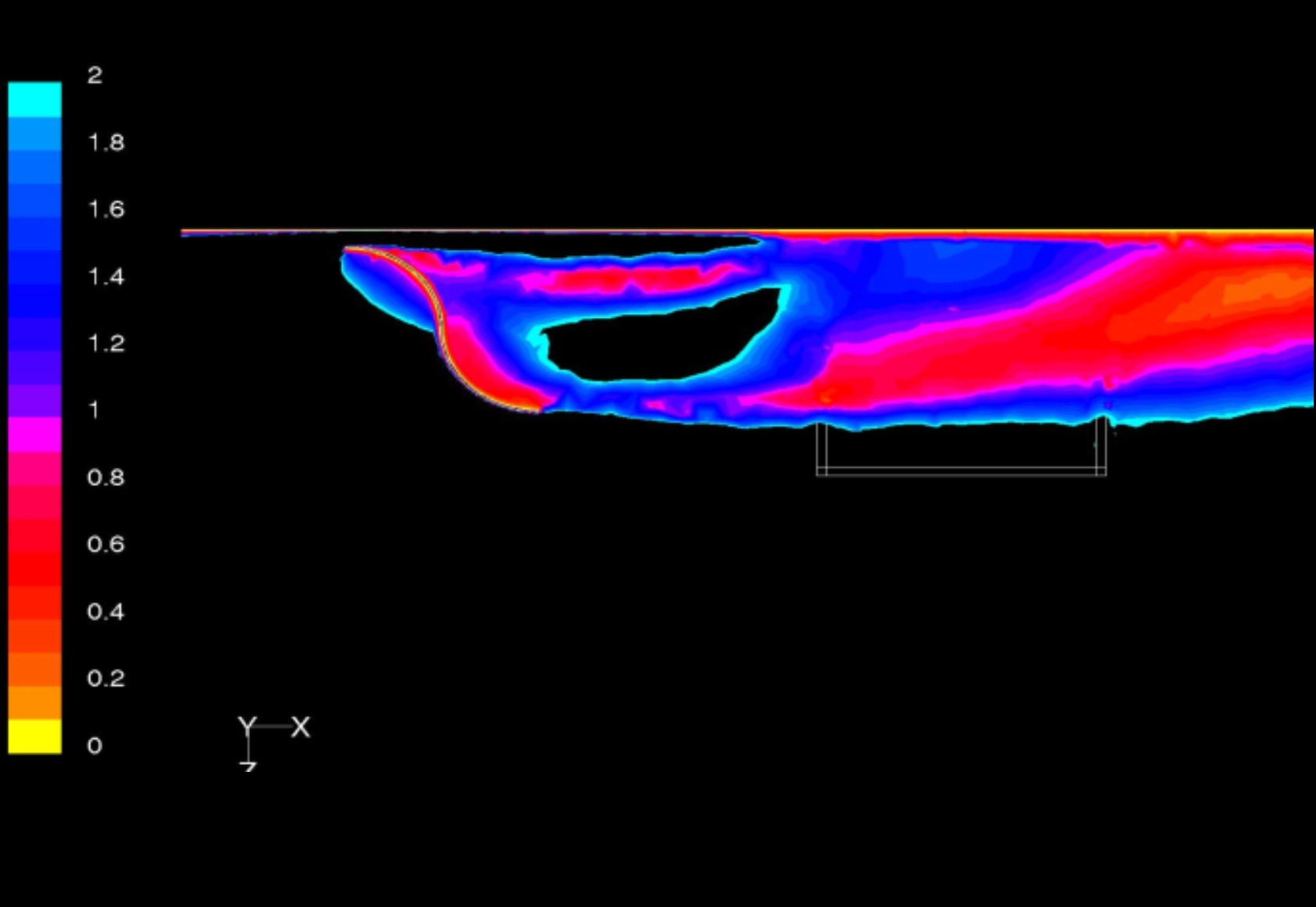
CFD was used to calculate the airflow around the ship and wind screen under realistic wind conditions. This allowed the influence of screen geometry on both the sheltered working area and the wind load to be assessed. The simulations showed that low overspray drift combined with a limited wind load could only be achieved when the gap between the screen and the ship’s hull remained sufficiently small and the screen had a specific shape.
The resulting design was subsequently tested experimentally, both indoors using fans and in the dry dock at wind forces up to Beaufort 6. The practical tests confirmed the effectiveness of the concept.