In 2001, a research project was initiated to minimise spray drift during painting operations in a shipyard dry dock. The design objectives were clear: consistent painting speed, improved paint layer quality, reduced paint consumption, enhanced working conditions, and lower environmental impact through precise paint application. Initially, this new painting technique was applied in a climate-controlled environment, such as in shipbuilding halls.
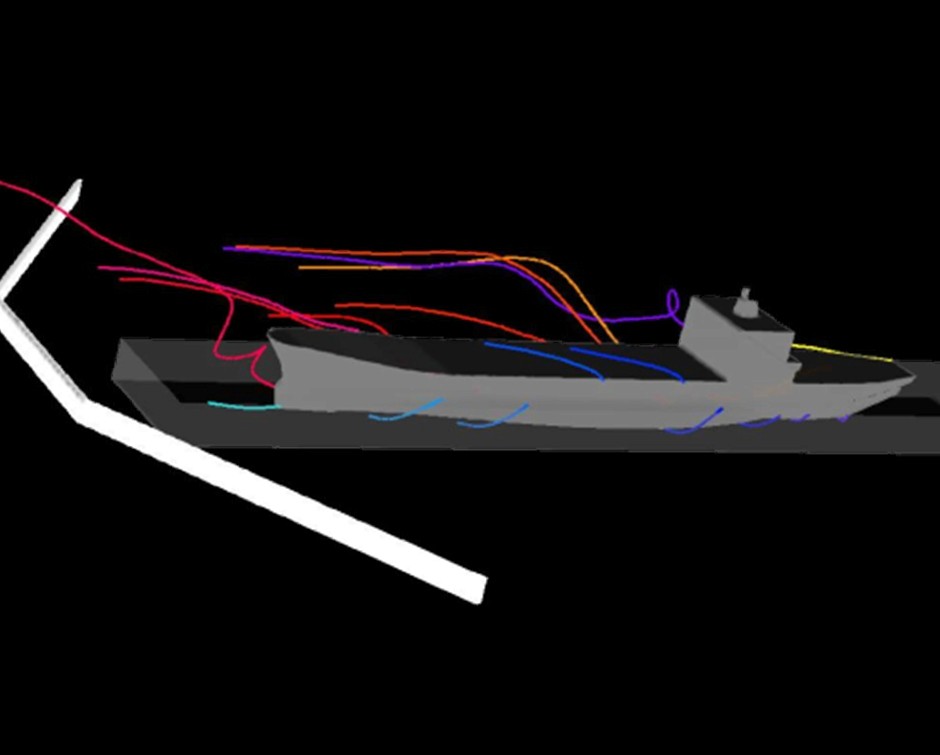
This painting technique was developed by a specialist project group comprising staff from various blasting and conservation firms and the Dutch research institute TNO. As the technique was also intended for use in open dry docks, FlowMotion was commissioned to conduct an investigation into airflow around a ship in a dry dock. In a second project, FlowMotion developed the mechanisms and principles of spray drift to implement various mitigation measures. Minimising this spray drift outside a protective hall would not only reduce environmental impact but also significantly cut paint consumption and, consequently, costs.
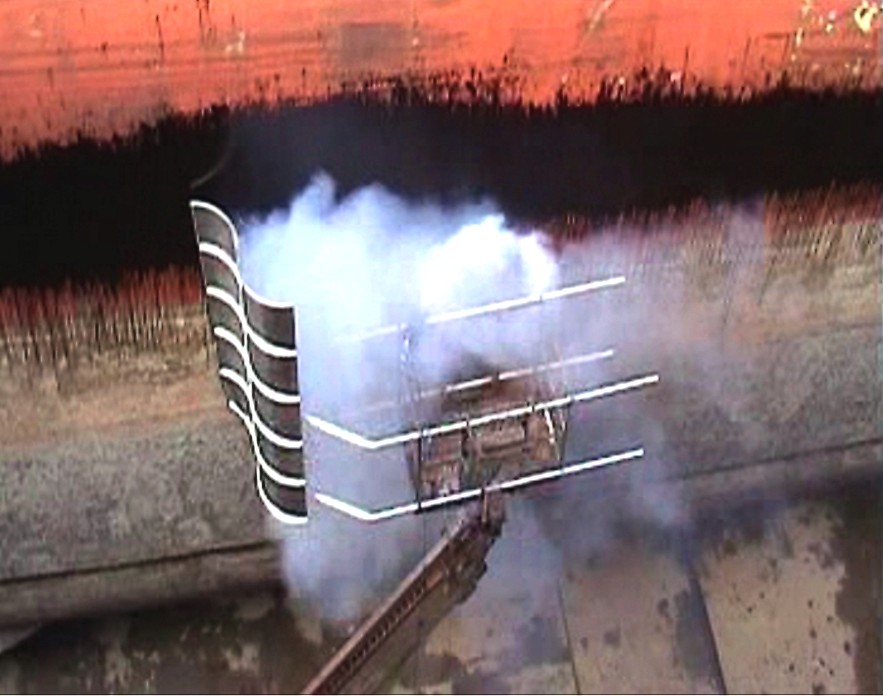
The most realistic measure identified was the development of a screen upstream of the painting position, designed to create a wind-sheltered area around the painter’s platform. A series of concept studies examined the position, size, and shape of the shielding. Alongside effectiveness, wind loading was a critical design parameter that had to be minimised to ensure maximum manoeuvrability of the screen and operator safety.
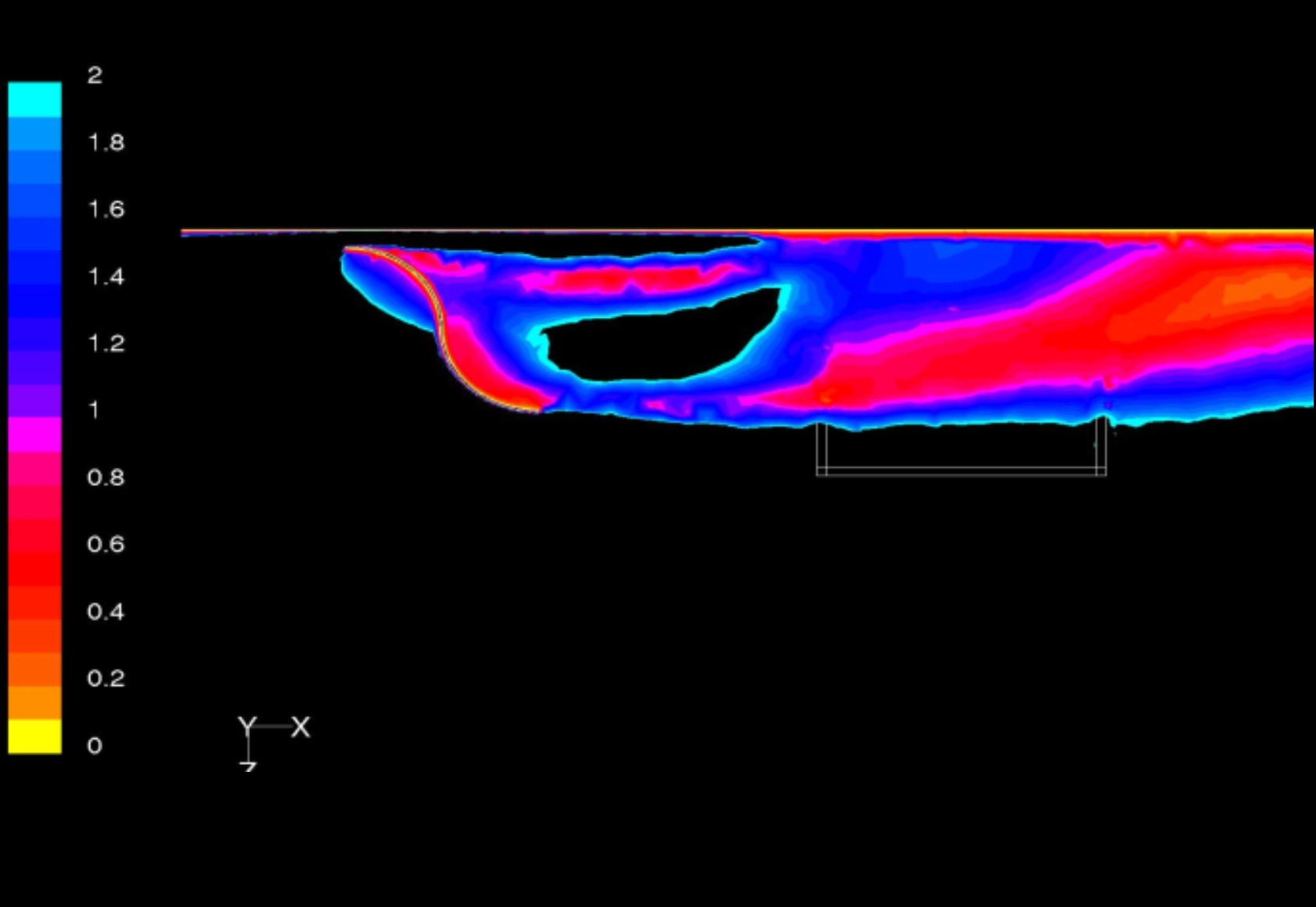
Computational Fluid Dynamics (CFD) was utilised to analyse airflow along the ship within the dock. Air movement around the ship and the shielding was simulated under realistic wind conditions. Findings indicated that the requirement for minimal drift combined with minimal wind loading could only be achieved if the gap between the screen and the hull was kept below a certain threshold and if the screen was constructed with a specific profile.
The final design, developed entirely within a virtual environment, was constructed and subjected to extensive testing—both in a hall using fans and in a dry dock with wind speeds of up to 6 Beaufort—successfully meeting all project expectations.