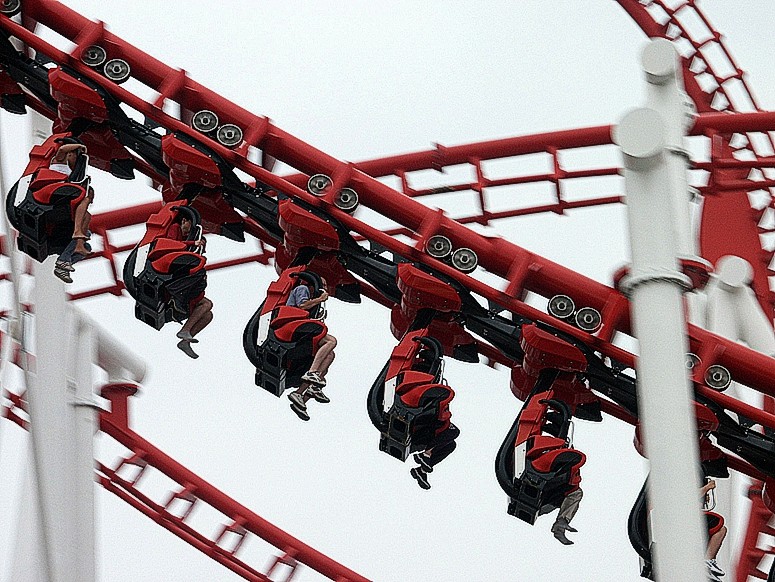
Roller-coaster development combines speed, ride experience, safety and structural requirements. The aerodynamics of the train also play a role: the shape of the carriages and the position of the passengers together determine the aerodynamic drag during the ride.
Lower aerodynamic drag reduces energy losses during motion. Total drag is influenced by both pressure drag and skin friction. Geometric details can cause local flow separation, vortical structures and changes in pressure distribution, thereby affecting the overall drag. At the same time, many of these details are required for structural or functional reasons.
Finding a good compromise between aerodynamics, styling and construction therefore requires more than evaluating the overall drag alone. The local flow field around the complete train must also be understood, and different orientations relative to the incoming airflow can be relevant.
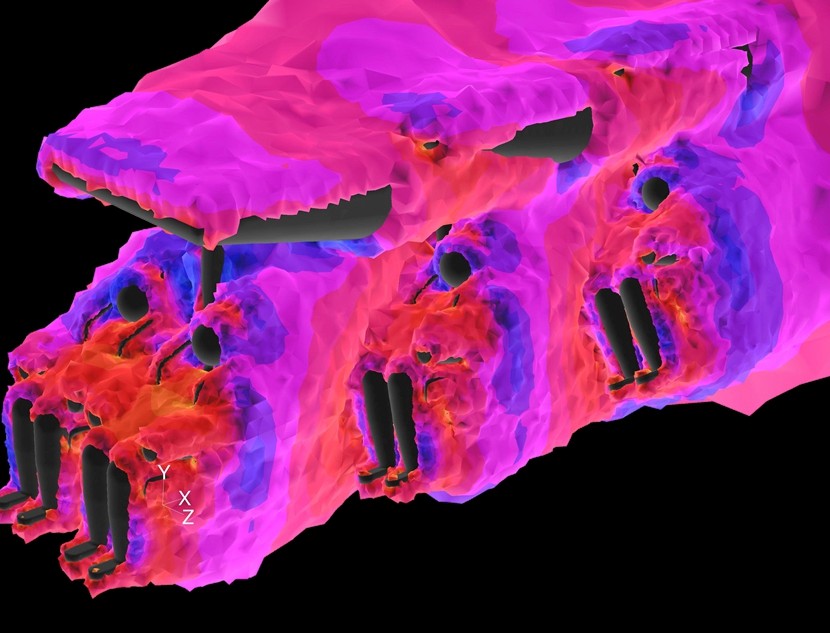
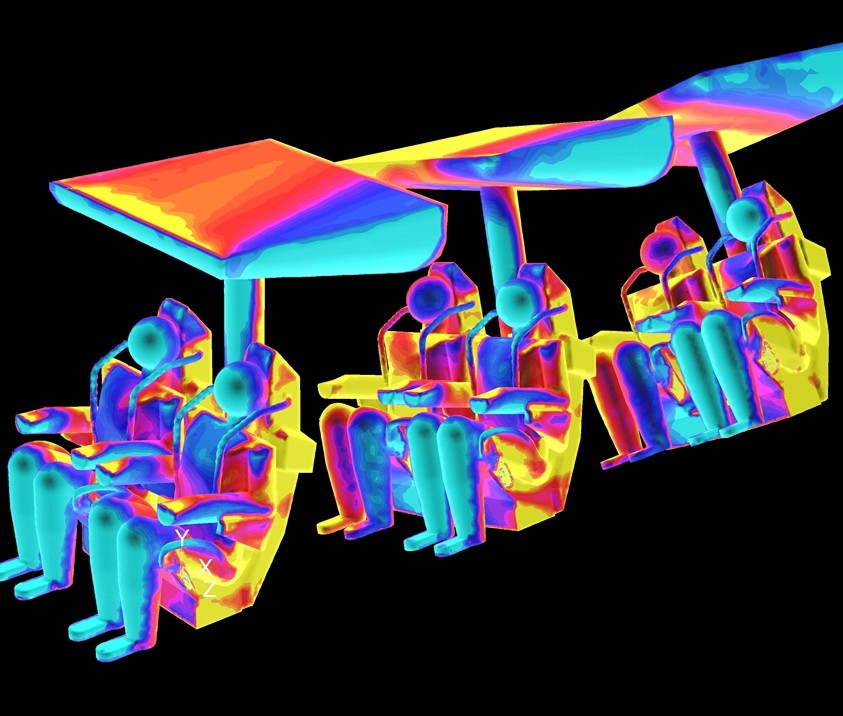
FlowMotion analysed the aerodynamic characteristics of the carriages using CFD. For different geometries, the flow field, pressure distribution and resulting aerodynamic forces were calculated. This showed which geometric details made an important contribution to the total drag.
Based on these results, the aerodynamic drag could be reduced within the structural and functional design constraints.