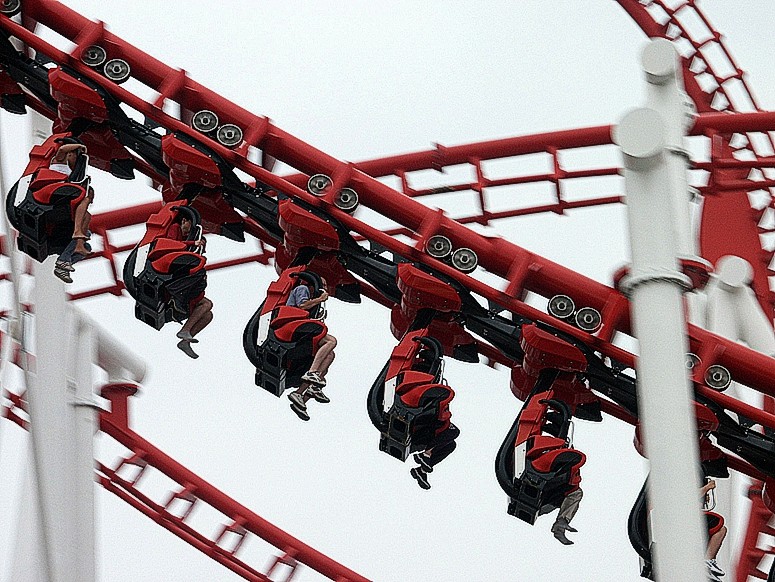
In the development of roller coasters, passengers’ demands for ever-faster and more spectacular rides play a decisive role, necessitating the constant setting of new standards. One of the latest developments in this field involves coasters where passengers are suspended beneath the track with their legs hanging completely free.
An important aspect of roller coaster optimisation is the aerodynamic properties of the gondolas, including the passengers. The lower the air resistance, the faster they can accelerate and reach higher speeds. The shape of the gondolas is the deciding factor here. Even the smallest details can have a major influence on the flow around the gondola and increase drag, yet these details often serve a structural function.
In the search for an optimal compromise between aerodynamics, construction, and handling, the airflow around the smallest details and the influence on the airflow around the entire object must be examined very precisely under the most diverse riding situations (e.g., varying bank angles and wind directions).
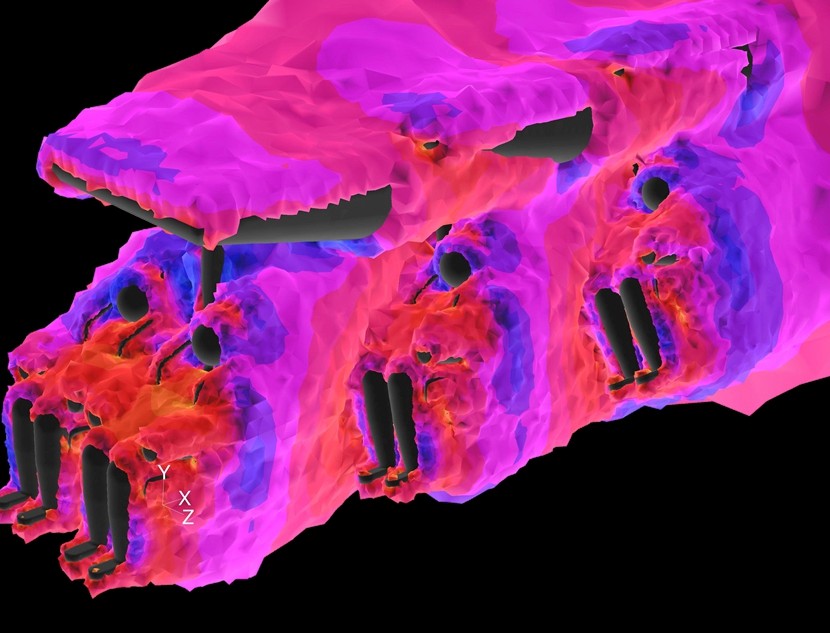
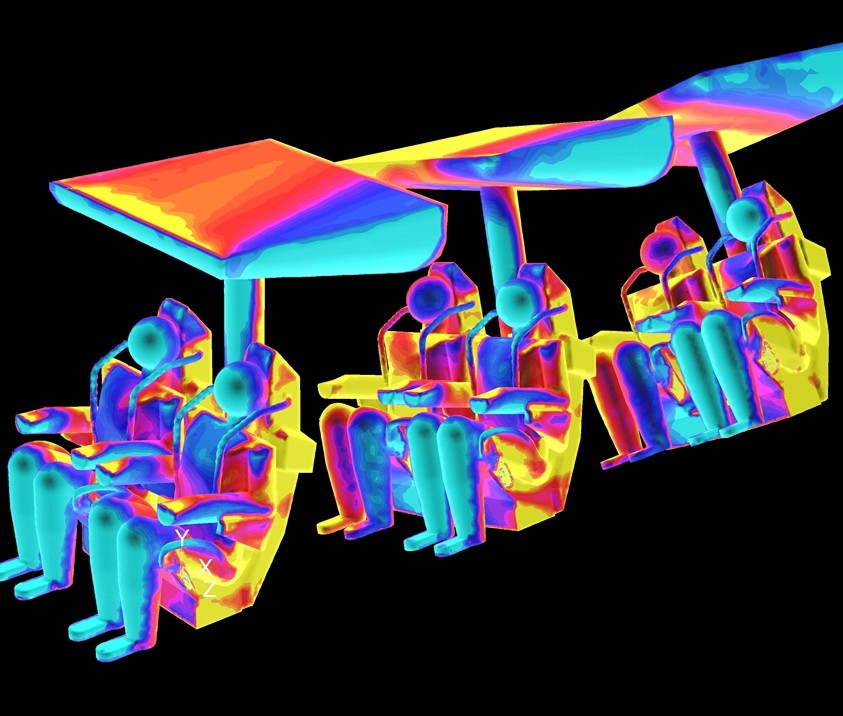
FlowMotion calculated the aerodynamic properties of the carriages using Computational Fluid Dynamics (CFD). CFD was used to calculate and visualise the acting pressures and frictional forces for various geometries.
Based on these results, the drag was significantly reduced within the constraints of the design parameters.