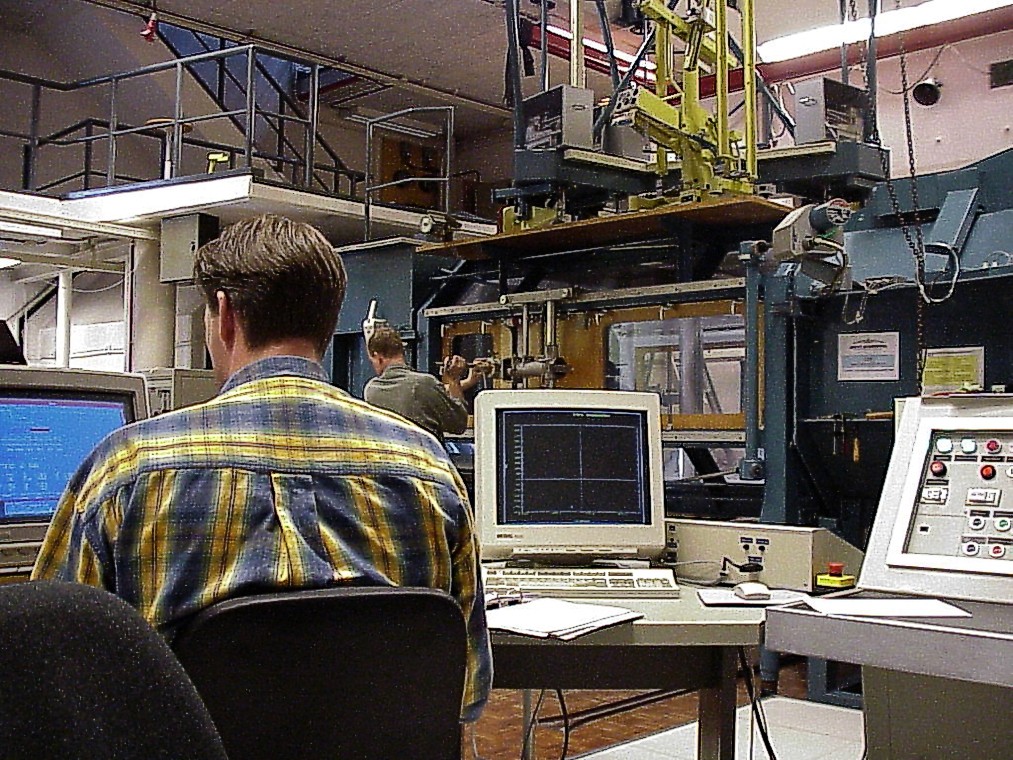
When developing barriers, aerodynamics play a more significant role than is initially apparent, as it must be ensured that, in the event of a power failure, barriers will descend into the secure horizontal position despite potentially adverse wind conditions. In this context, FlowMotion conducted comprehensive wind tunnel testing to minimise the forces that might prevent a barrier from lowering. For this purpose, a 1m section of the barrier was mounted vertically in the wind tunnel on a force measurement system to record acting forces and moments in relation to the angle of attack and wind speed.
The current investigation focused on determining the total forces and moments for all realistic wind conditions, barrier designs, and positions. To achieve the highest possible accuracy, potential vortex effects at the ends of the barriers were also taken into account.
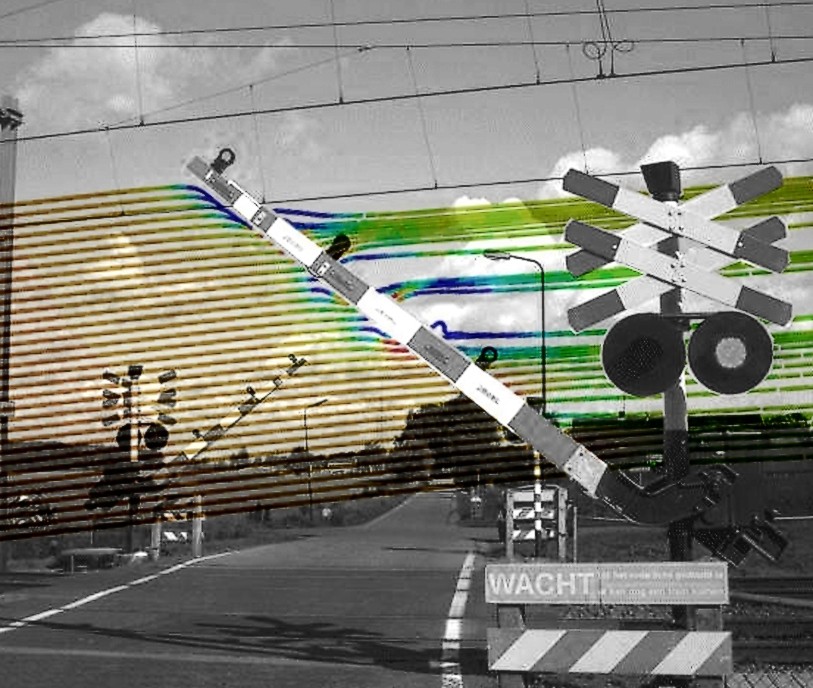
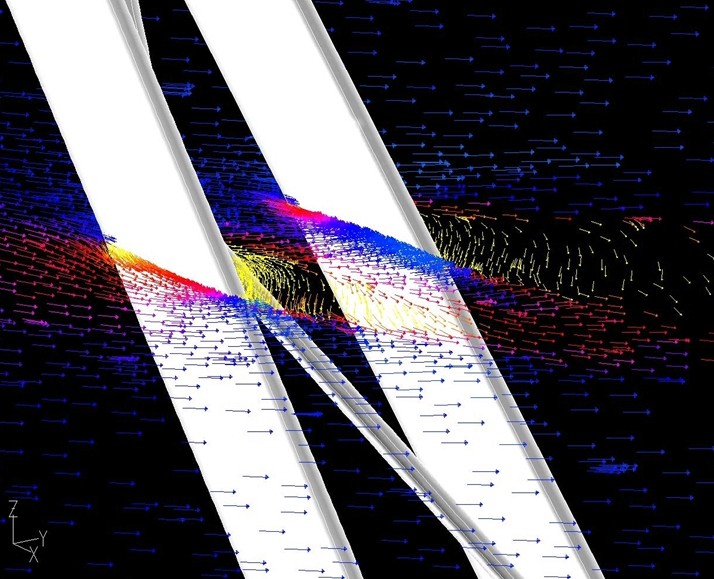
Due to the large number of scenarios to be examined (barrier geometry, wind direction, wind speed, barrier position) and because ‘non-vertical’ barrier positions could not be investigated in the wind tunnel, additional Computational Fluid Dynamics (CFD) simulations were performed. In this process, all geometries were transferred to the computer at full scale, the airflow around the barrier was simulated, and the acting forces were calculated.
To verify the accuracy of the simulations, the experimentally determined forces from the wind tunnel measurements were recalculated using the simulations at the beginning of the study. This comparison showed good correlation within the scope of the project objectives.
The simulations attempted to replicate even the smallest geometric details that could influence the drag of the barrier. The vortex structures identified on barriers with truss construction confirmed the necessity of such high detail. By calculating forces for all examined scenarios and visualising local flow effects around the barriers, entirely new insights into the aerodynamics of barriers were gained.