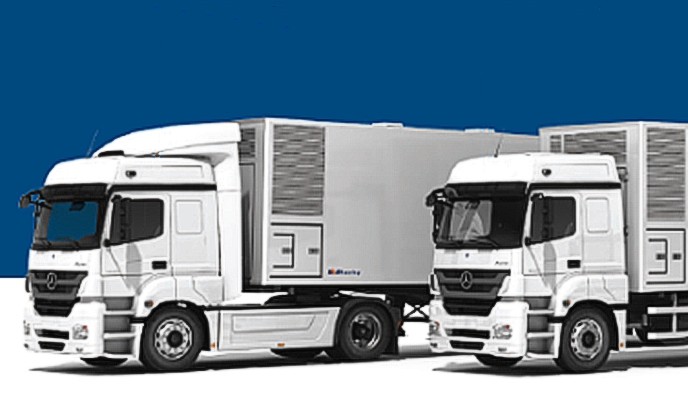
During chick transport, the climate must remain suitable throughout a densely loaded cargo space. The challenge is not simply to supply enough ventilation air, but to distribute that air uniformly through the stacked transport containers while keeping heating, cooling and fan power within practical limits.
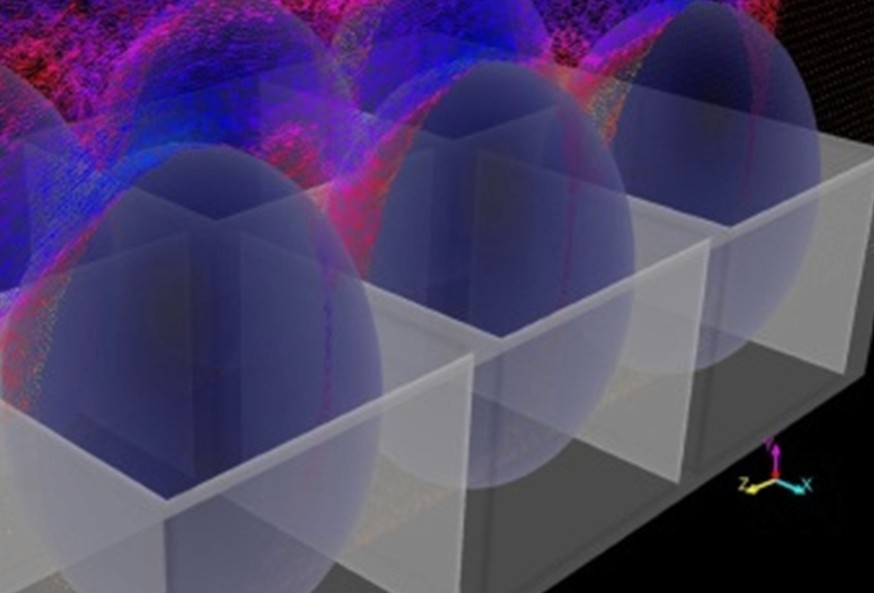
FlowMotion combined measurements and CFD to develop a new ventilation concept for a chick transporter. Simulations were first performed at the level of individual transport containers to determine their aerodynamic resistance and the airflow around the animals.
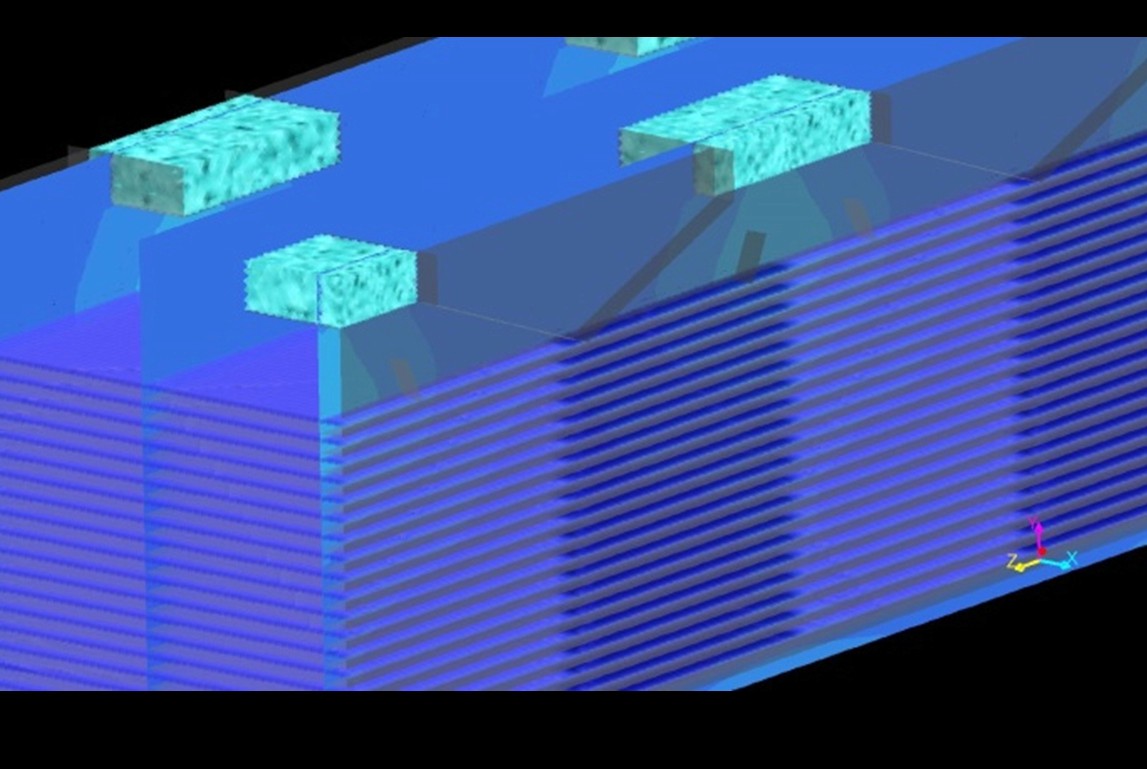
These results were then incorporated into a model of the complete cargo space. The densely stacked containers behave aerodynamically like a porous region, making the central part of the load particularly difficult to reach with fresh heating or cooling air.
The calculations showed the local velocity and temperature distributions throughout the vehicle and identified regions with insufficient ventilation or undesirable recirculation. Measurements were used to support and validate the numerical analysis.
Different ventilation layouts could therefore be assessed during the concept phase, allowing the climate around the animals to be improved before the vehicle design was finalised.