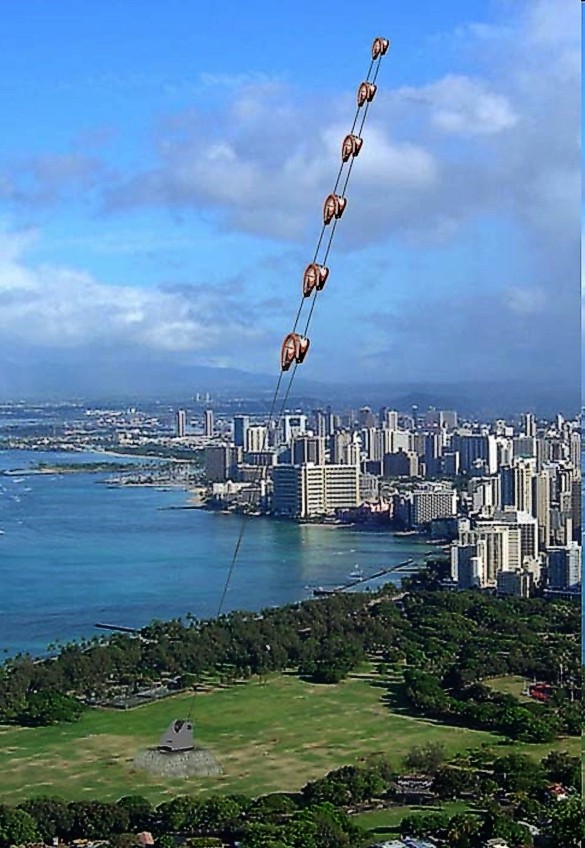
High-altitude winds contain substantial kinetic energy. One concept for extracting part of this energy uses a controllable kite connected to a ground-based generator by a tether.
During the power-producing phase, the kite flies a controlled trajectory and generates a high aerodynamic force. The tether is reeled out under tension and drives a generator on the ground. The kite must then be returned using considerably less energy than was produced during the outward phase.
FlowMotion investigated the aerodynamic feasibility of this concept. The relevant forces depend on the apparent wind seen by the kite, its aerodynamic lift and drag, the flight path and the tether force. The complete cycle must therefore be considered rather than a single stationary operating point.
The analysis was used to estimate the mechanical power that could be generated during the traction phase and the energy required for the return phase. This provided insight into the net energy yield and the conditions under which the concept could operate effectively.