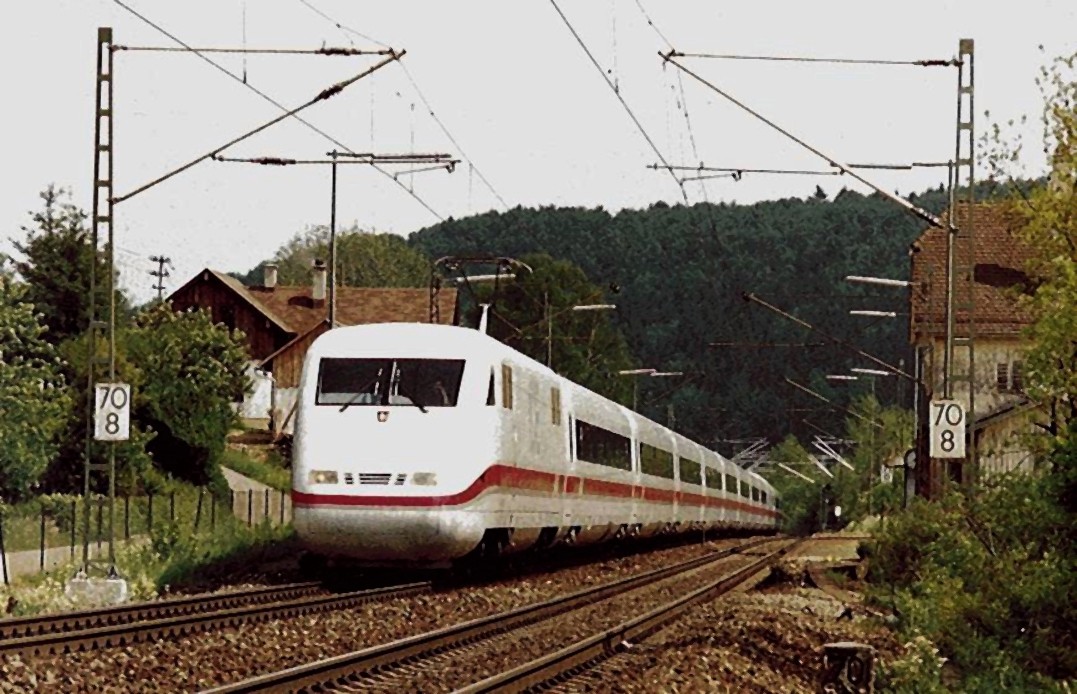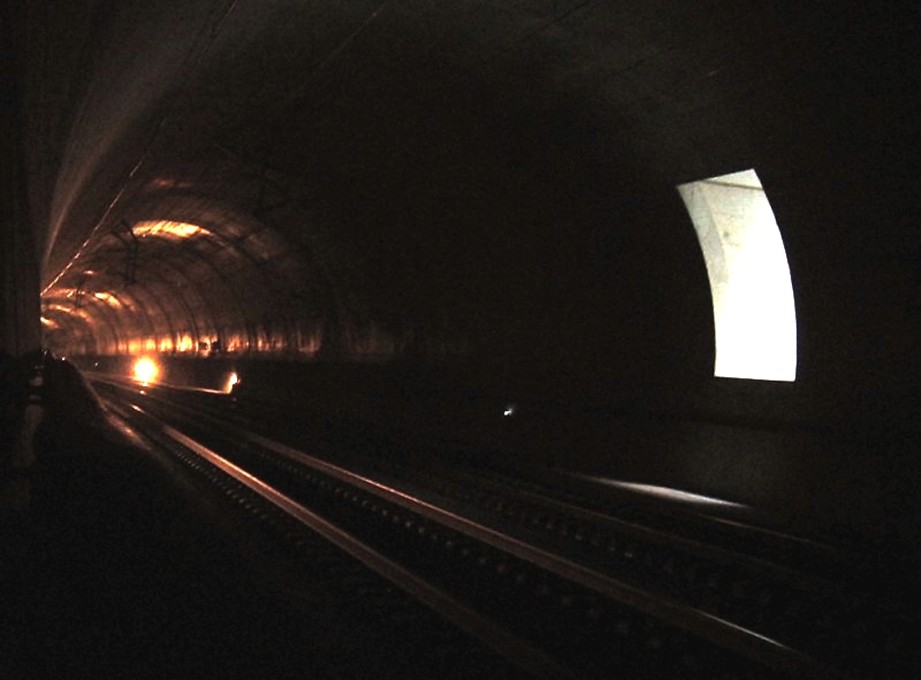
When a high-speed train enters a tunnel, it rapidly displaces the air ahead of it. Because the tunnel restricts the available flow area, the train acts like a piston and generates transient pressure waves that propagate through the tunnel.
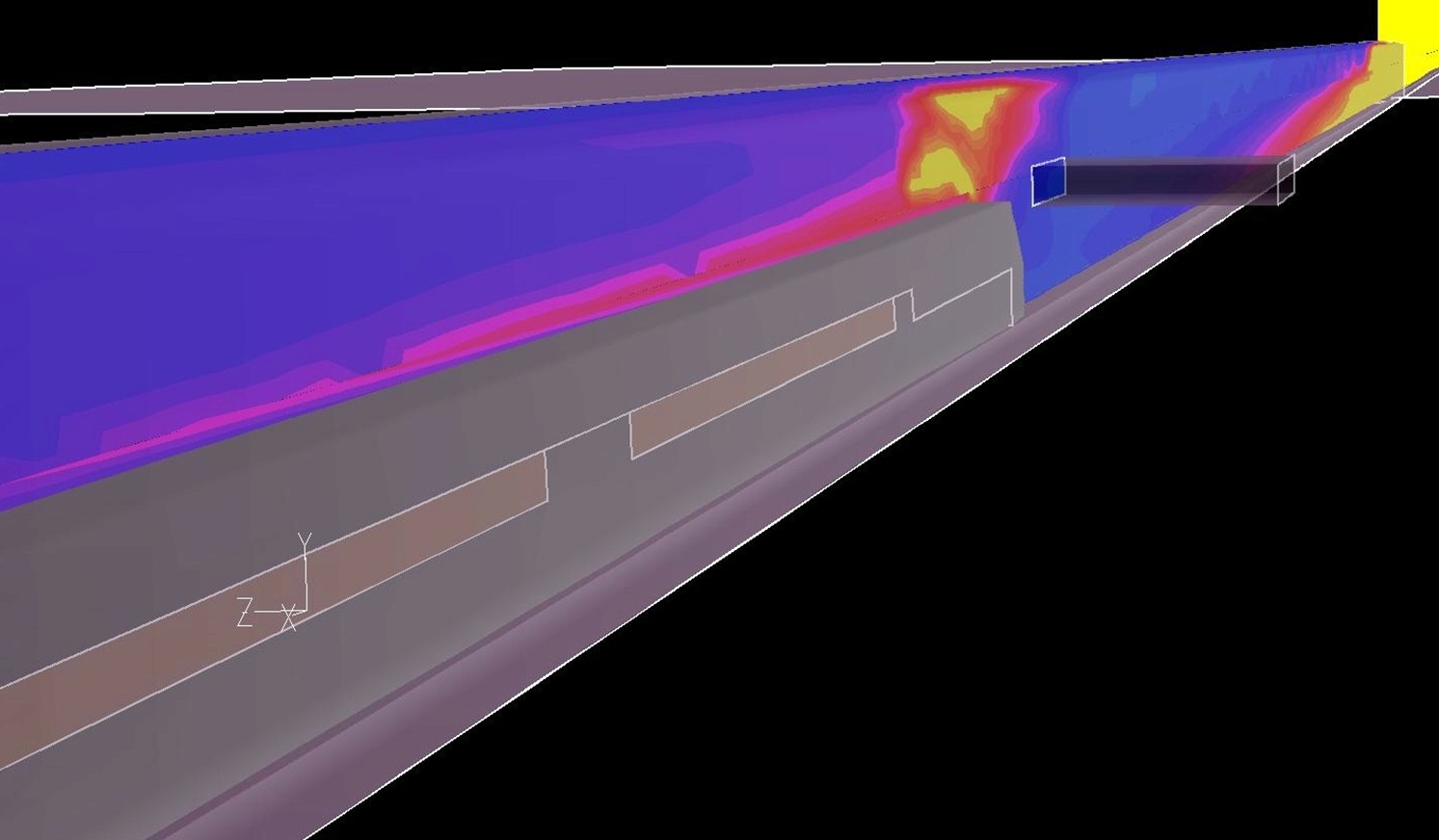
FlowMotion used transient CFD to analyse the airflow and pressure development associated with a high-speed train travelling through a tunnel. The calculations followed the changing flow field as the train moved through the confined geometry.
The piston effect produces substantial local air velocities and time-dependent pressure variations. For sufficiently high train speeds, compressibility becomes important because pressure disturbances propagate through the tunnel as waves rather than being transmitted instantaneously.
The simulations provided the local velocity, static pressure and, where relevant, density fields as functions of time. This made it possible to assess the aerodynamic conditions that tunnel equipment and safety systems may experience during train passage.
A transient calculation is essential for this type of problem: a steady-state analysis cannot reproduce the moving train, piston effect and propagating pressure waves correctly.