Heat exchangers are critical components in many oil, gas, petrochemical and offshore installations. A good design combines high heat transfer with a limited pressure drop and compact geometry. Material properties, corrosion resistance and fouling of the flow passages can also be important design considerations.
FlowMotion investigated several helical heat-exchanger tubes both experimentally and numerically. The main objective was to determine how accurately CFD could predict heat transfer and pressure drop in these geometries.
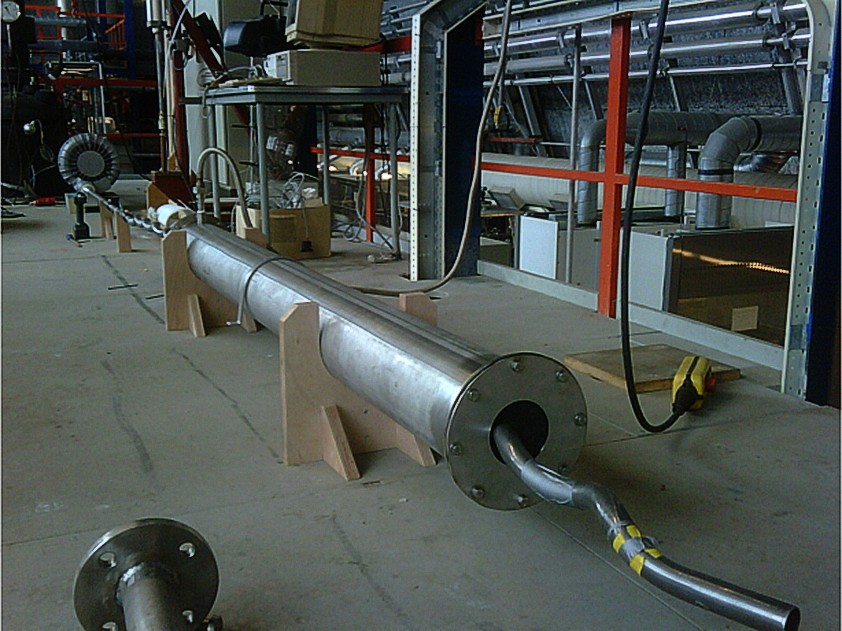
For a meaningful validation, experiment and simulation had to use the same hydraulic and thermal boundary conditions. These included volume flow rate, wall temperature, and inlet velocity and temperature profiles. The quantities used for comparison also had to be defined consistently, including pressure drop, local temperatures and the mass-averaged outlet temperature. An extensive experimental test rig was built for this purpose.
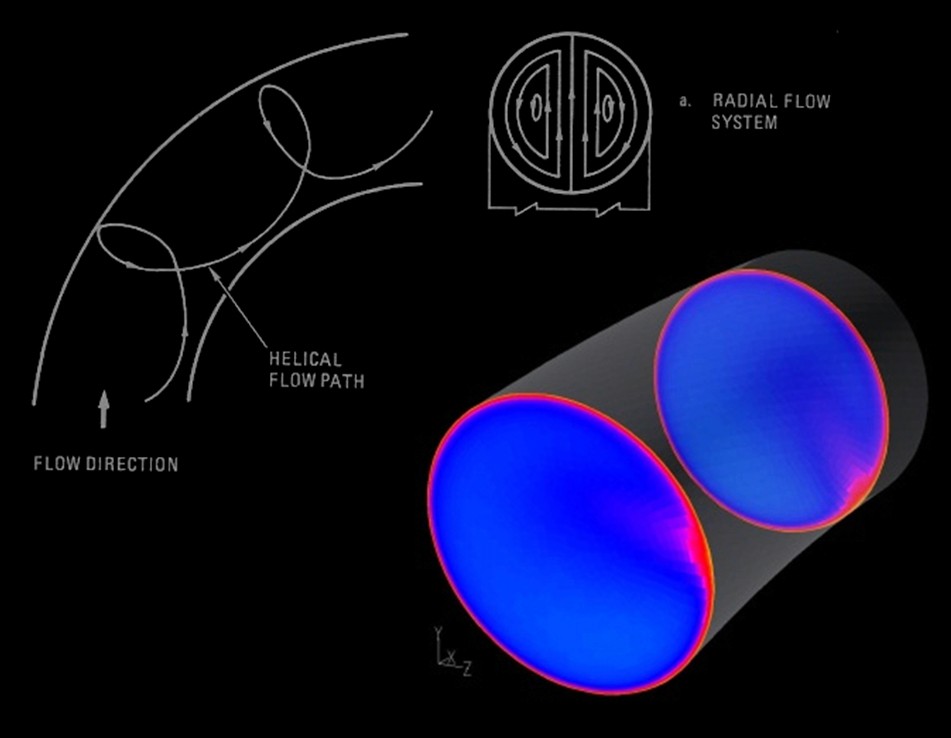
The helical geometry also presented numerical challenges. Tube curvature generates secondary flows that influence momentum and heat transfer. Relevant fluid properties, including density and viscosity, were modelled as temperature-dependent. A mesh-independence study also showed that a fine computational grid was required for accurate results. To keep the calculations manageable, a specific method was used in which the tube was divided into individual segments.
The final comparison showed a high level of agreement between measurements and CFD for both global quantities and local flow and temperature variables. The results were presented at the 9th European Congress of Chemical Engineering.