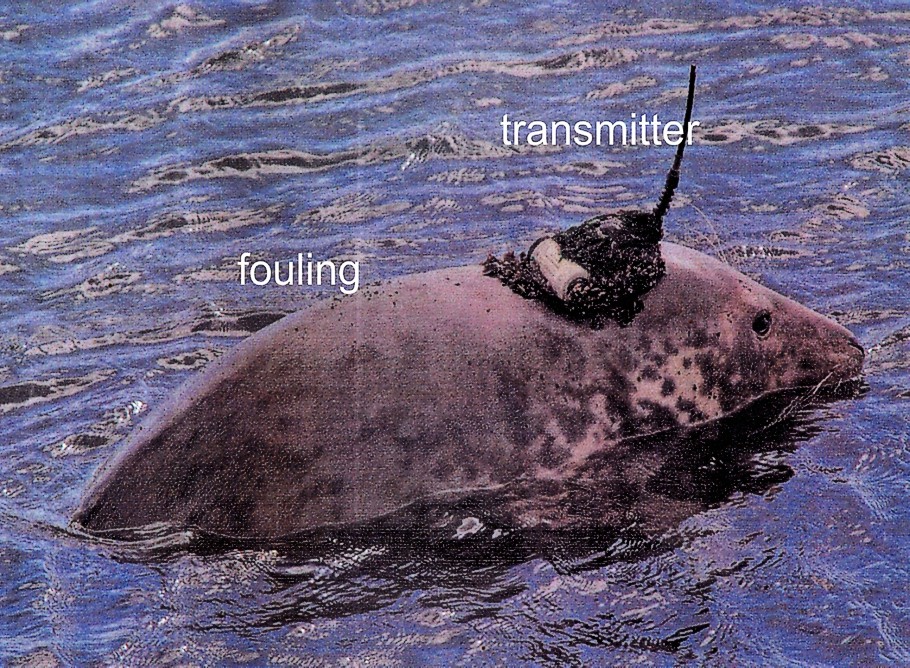
Satellite tracking tags have been used for many years to study the movement and behaviour of animals. They are also used on seals, allowing researchers to monitor animals over large distances without relying on direct observation.
The tags are attached to the head or back of the animal with epoxy resin. This raises an important question: to what extent does the tag alter the seal’s natural swimming behaviour? After severely emaciated tagged seals had been found, the possible hydrodynamic influence of the transmitter was investigated.
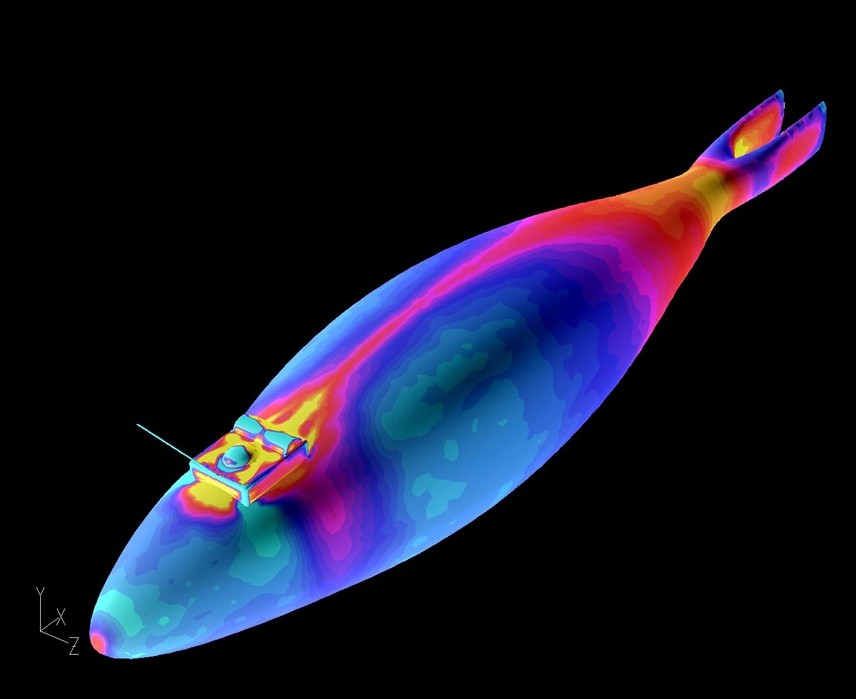
FlowMotion simulated the water flow around a grey seal both with and without the tracking tag. A three-dimensional model of the animal was created from photographs, followed by a computational mesh designed to resolve the local flow around both the body and the tag.
The simulations showed that the tag changed the hydrodynamic drag by approximately 12%. The moment about the horizontal axis changed by approximately 35%. In addition, regions of low wall shear stress developed on the seal’s back in the wake of the tag. Skin growths had been observed in these same areas on the severely emaciated animals.
The relationship between these calculated hydrodynamic effects and possible changes in the animals’ behaviour was investigated further during the project.