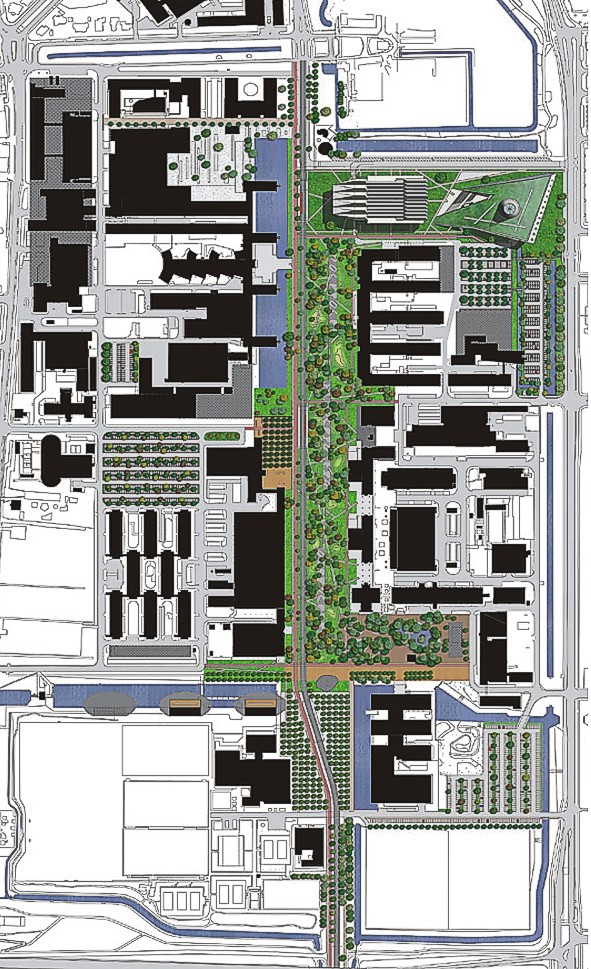
In the spring of 2004, the architectural firm Mecanoo presented a new concept for the TU Delft campus, in which the new tram line 19 between Leidschendam, Delft Central Station, and the university forms a central focus. This tram line leads to a completely car-free, park-like campus, finally giving TU Delft the identity it had desired for years.
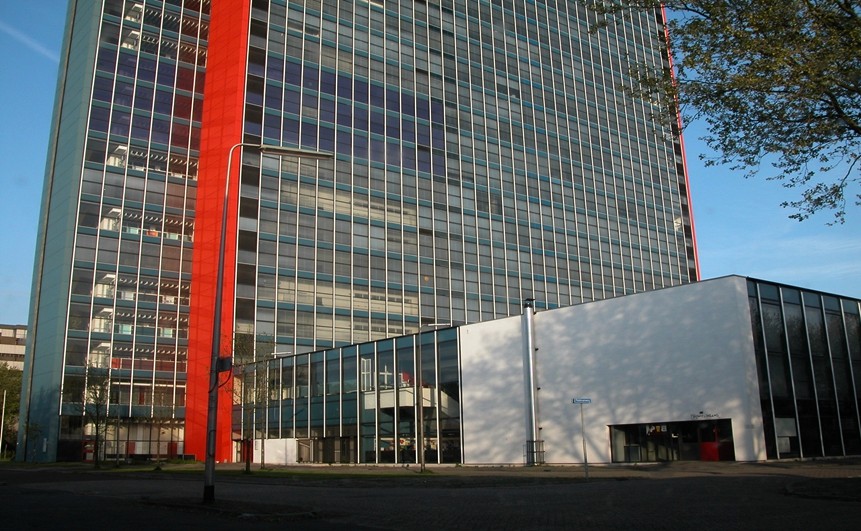
At that time, the campus was defined by the style of the 1960s: large, massive buildings along a wide road with no significant public squares. The new campus was intended to establish itself as a 21st-century university, meaning ‘integrated engineering’ with multidisciplinary meeting places. Due to its central location and the traffic calming provided by the tram, Mekelweg was ideal for such spaces. In the heart of this Mekelpark, a tram stop was planned in the immediate vicinity of the Electrical Engineering building. Anyone who has ever walked or cycled past this building on a windy day knows the storm gusts that can occur there, even when the wind is only moderate.
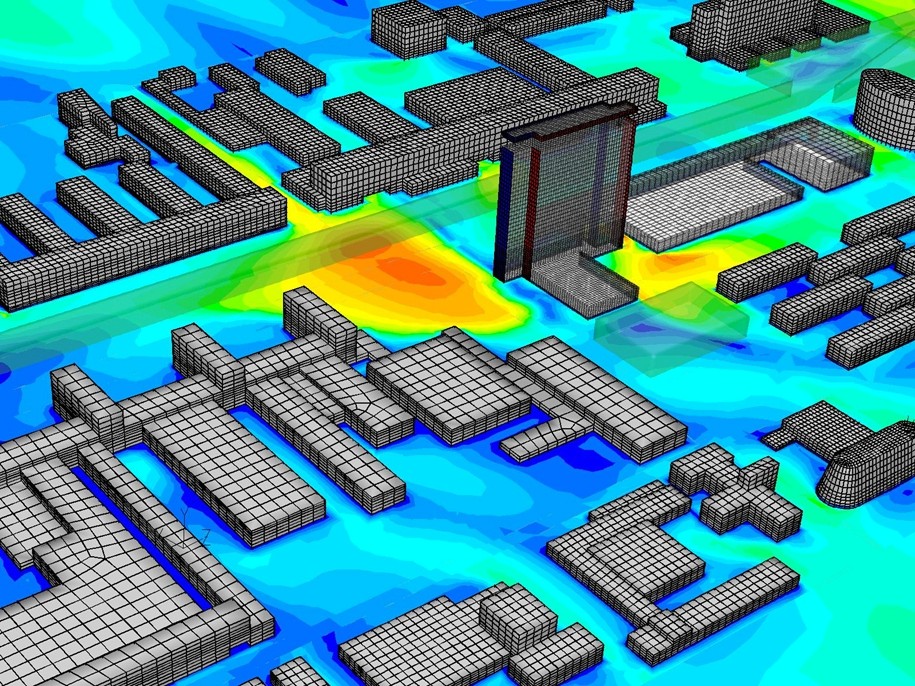
To guarantee a comfortable environment in the future park and at the tram stop despite the challenging positioning of the buildings, Vastgoed BV Delft commissioned FlowMotion to carry out an investigation into the wind-related disturbances. Computational Fluid Dynamics (CFD) calculations were used for these investigations. A numerical model of the area around the Electrical Engineering building was created based on photos, old drawings, and models. To account for the influence of the many trees, they were modelled using porous blocks. The corresponding wind boundary layer was specified at the edges of the computational area. The local velocity distribution was calculated for 12 different wind directions.
Strong local gusts occur, particularly when the wind hits the Electrical Engineering building head-on. These gusts are caused by ‘downdrafts’ that move steeply downwards from approximately two-thirds of the building’s height. Based on the flow simulations, the team from Mecanoo, Vastgoed BV, and FlowMotion developed measures which were also verified using further simulations.