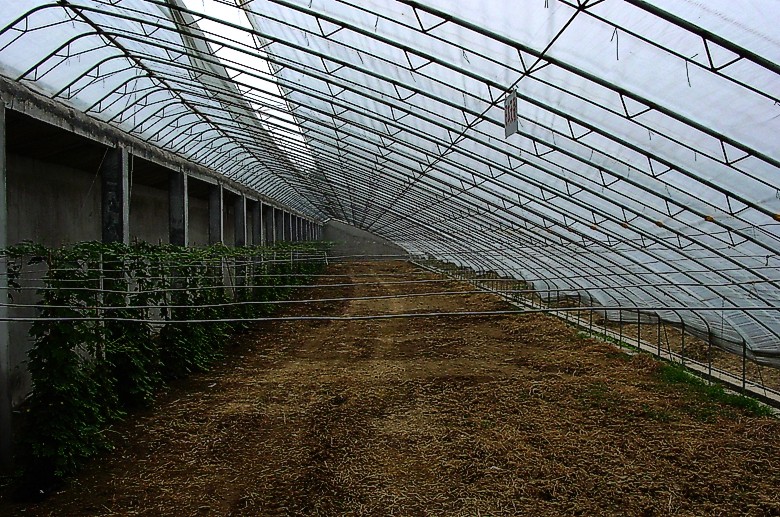
The climate inside a greenhouse is determined by a continuous interaction between solar radiation, outdoor conditions, heat transfer through the construction and air movement inside the greenhouse. For long-term performance, these effects have to be considered together rather than at a single operating point.
FlowMotion analysed the thermal behaviour of a greenhouse using numerical simulations. Natural convection caused by temperature-dependent density differences was included, together with heat conduction through relevant construction elements and thermal radiation.
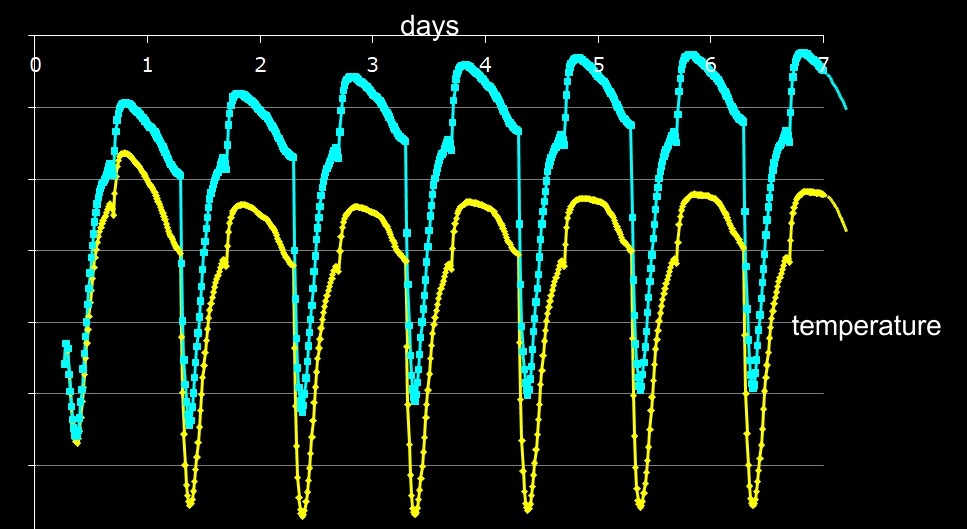
The calculations showed how temperature differences drive air circulation inside the greenhouse and how the resulting flow affects the local heat transfer. Changes in solar load and ambient conditions could therefore be related to the resulting indoor temperature distribution.
By combining the different heat-transfer mechanisms in one model, the long-term thermal performance of the greenhouse concept could be assessed and design choices could be evaluated before construction.