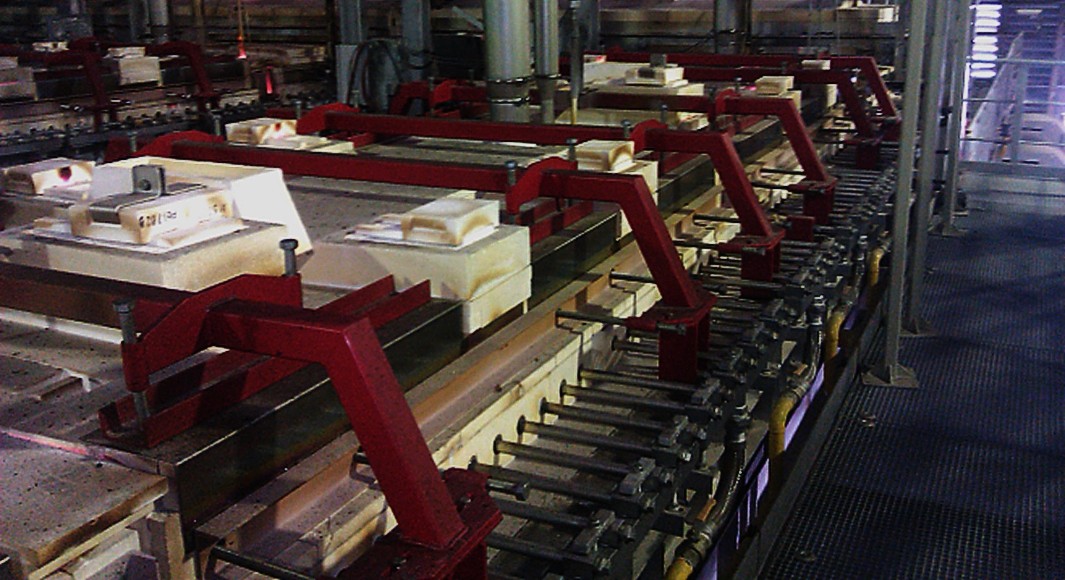
Glass products leave the production process at high temperature and subsequently cool while being transported through the plant. A considerable amount of thermal energy is therefore released to the surroundings.
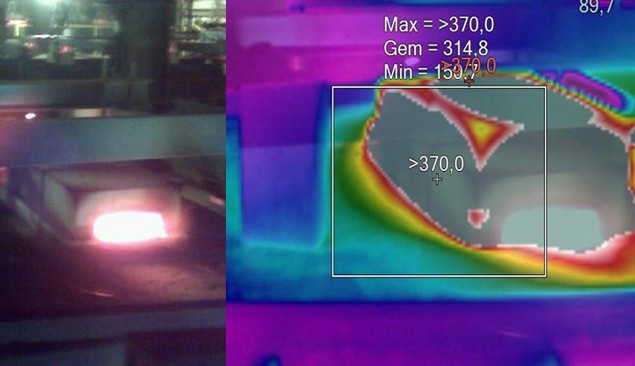
FlowMotion investigated whether part of this energy could be recovered. Measurements and CFD were combined to determine the heat released by the hot glass products and the way this heat was transferred to the surrounding air.
The thermal behaviour is governed by several heat-transfer mechanisms. Convection transfers heat from the glass to the surrounding airflow, while thermal radiation can make a substantial contribution at high product temperatures. The movement and temperature of the surrounding air determine how much of this energy can be collected effectively.
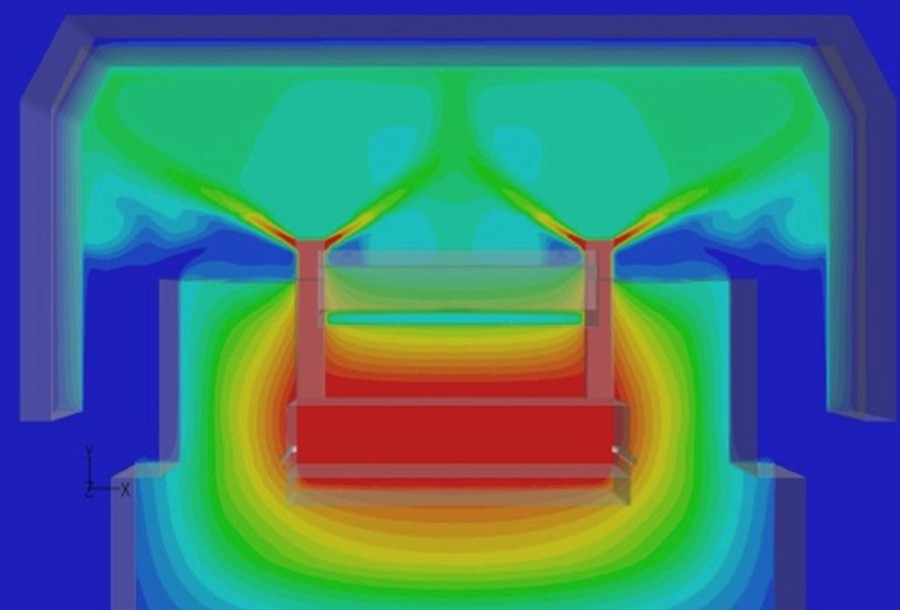
CFD made the local velocity and temperature fields visible and allowed different heat-recovery concepts to be compared. Experimental measurements were used to provide boundary conditions and to assess the numerical results.
The combined approach provided a physical basis for determining the recoverable heat and for developing an energy-recovery system suitable for the production process.