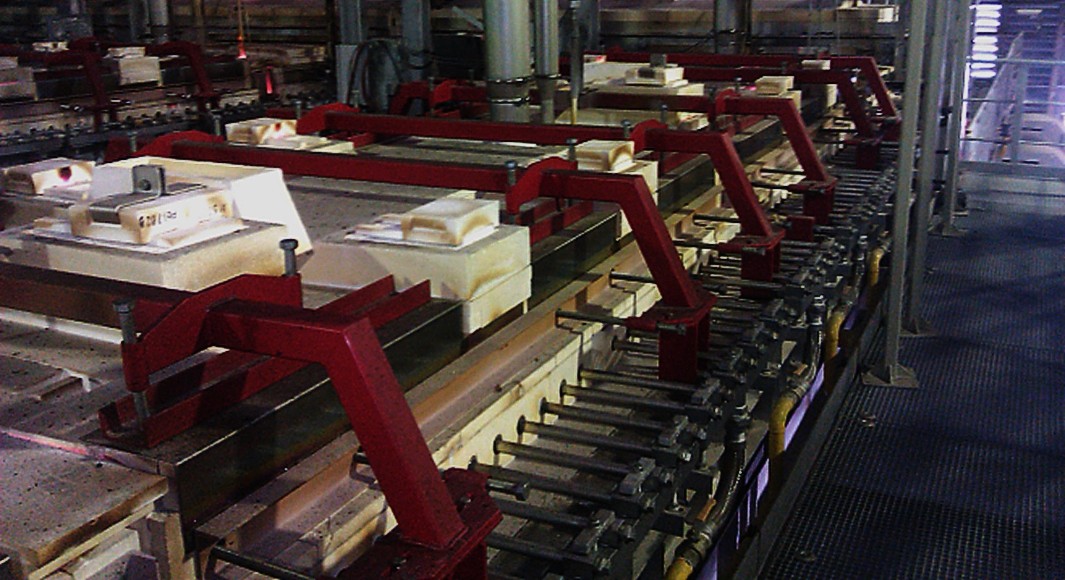
As part of an energy-efficient refurbishment of a plant producing up to 1.2 billion bottles and containers per year, the goal was to recover as much energy as possible. The production of glass containers is roughly divided into four sections: the melting furnace, the conditioning tunnels where the glass is transported to the forming machines, the forming machines, and the cooling tunnels. Approximately 100,000 m³ of natural gas is consumed daily in this process.
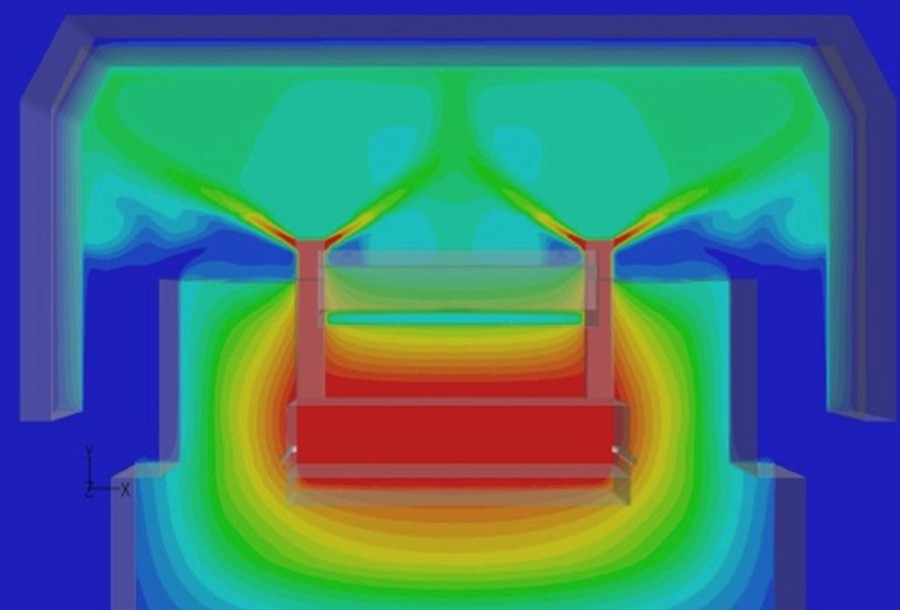
Since the waste heat from the melting furnaces was already being utilised, this project aimed to recover waste heat from the conditioning tunnels—where glass is at a temperature of 1200°C—using extraction hoods. The difficulty in developing the hood was not only maximising energy recovery but also ensuring during the planning phase that the temperature within the glass did not change. Even the slightest temperature changes can negatively affect the production process and quality. This could only be accomplished using flow simulations (CFD calculations).
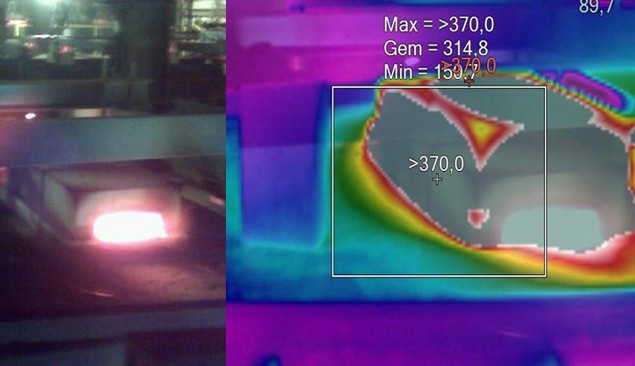
Initially, infrared images of the entire plant were taken. This information served both to estimate the expected heat flows and to validate the simulation results. In this project, particular emphasis was placed on the most precise simulation possible of three heat transfer mechanisms: heat conduction through various layers, free convection, and thermal radiation. The quality of the simulation model was proven by comparing the simulation results with the infrared measurements.
Subsequently, a wide variety of geometric variants and extraction settings were investigated, allowing up to 60% of the waste heat to be recovered.