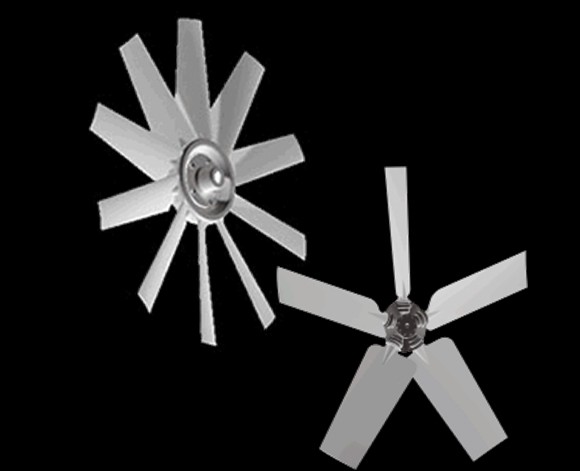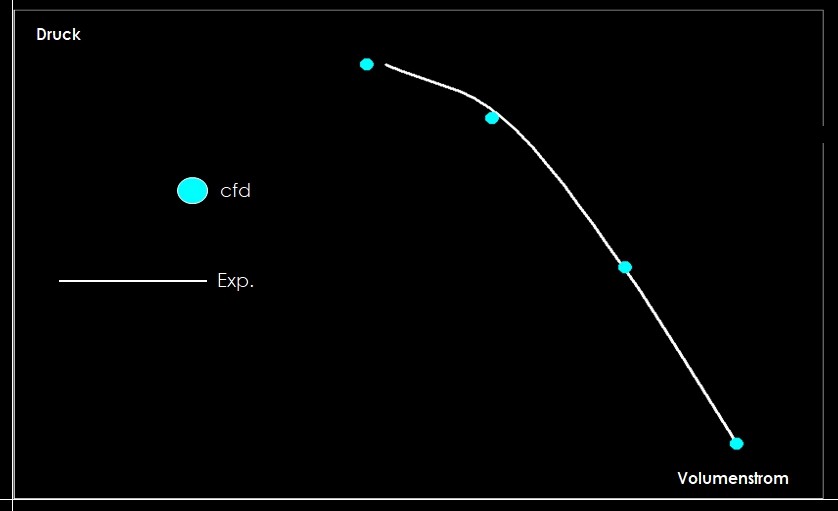
The aerodynamic performance of an axial fan depends strongly on the flow over its blades. Pressure gradients, boundary-layer development and local flow separation determine the blade loading and contribute directly to the fan's pressure rise and efficiency.
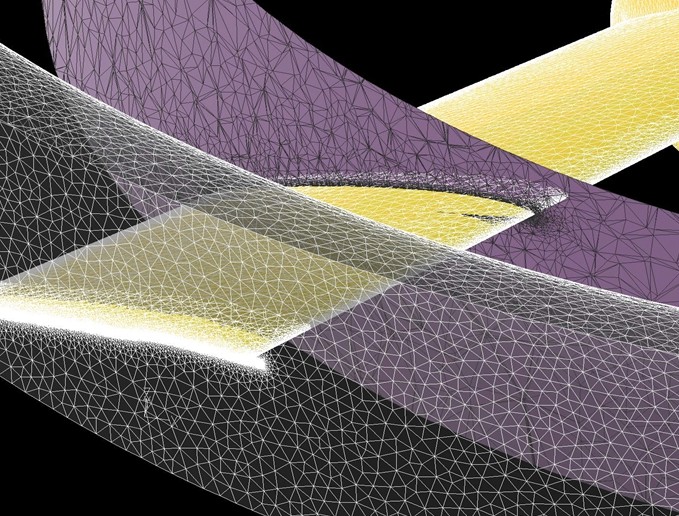
FlowMotion analysed an axial-fan blade with CFD using a computational mesh specifically designed to resolve the near-wall flow. Sufficient resolution normal to the blade surface is essential if the boundary layer and its interaction with adverse pressure gradients are to be predicted reliably.
The calculations provided the pressure and velocity distributions around the blade and showed where the boundary layer thickened or approached separation. The selected near-wall treatment and corresponding y+ values were matched to the turbulence modelling approach.
This detailed analysis made it possible to relate local blade geometry directly to aerodynamic losses and provided a sound basis for subsequent blade optimisation.