As the energy yield of wind turbines increases, so does the electrical load on generators and transformers. Since these loads release large amounts of heat into the interior of the system, all components must be adequately cooled. FlowMotion was therefore commissioned to develop a passive ventilation system that functions without additional fans.
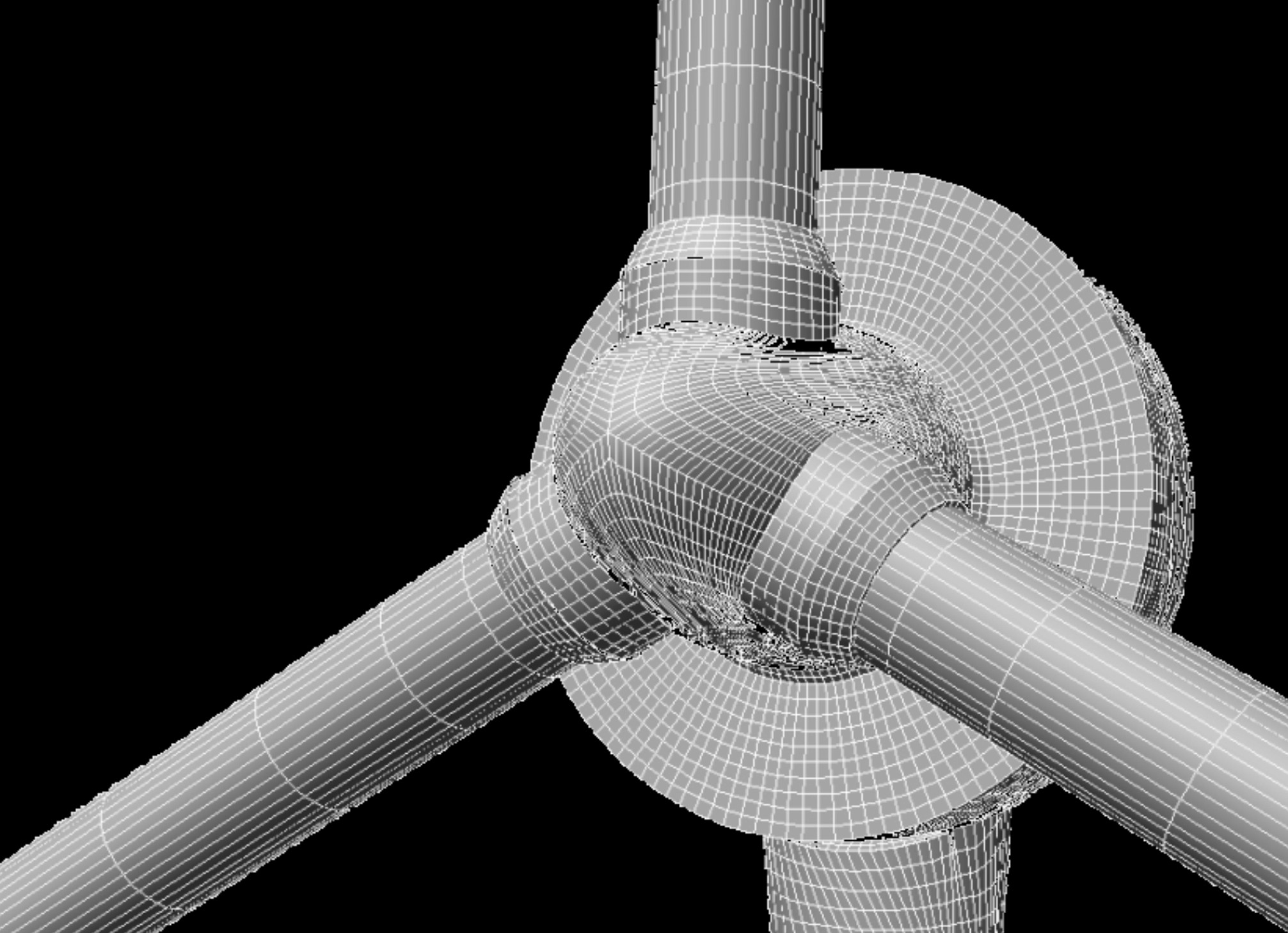
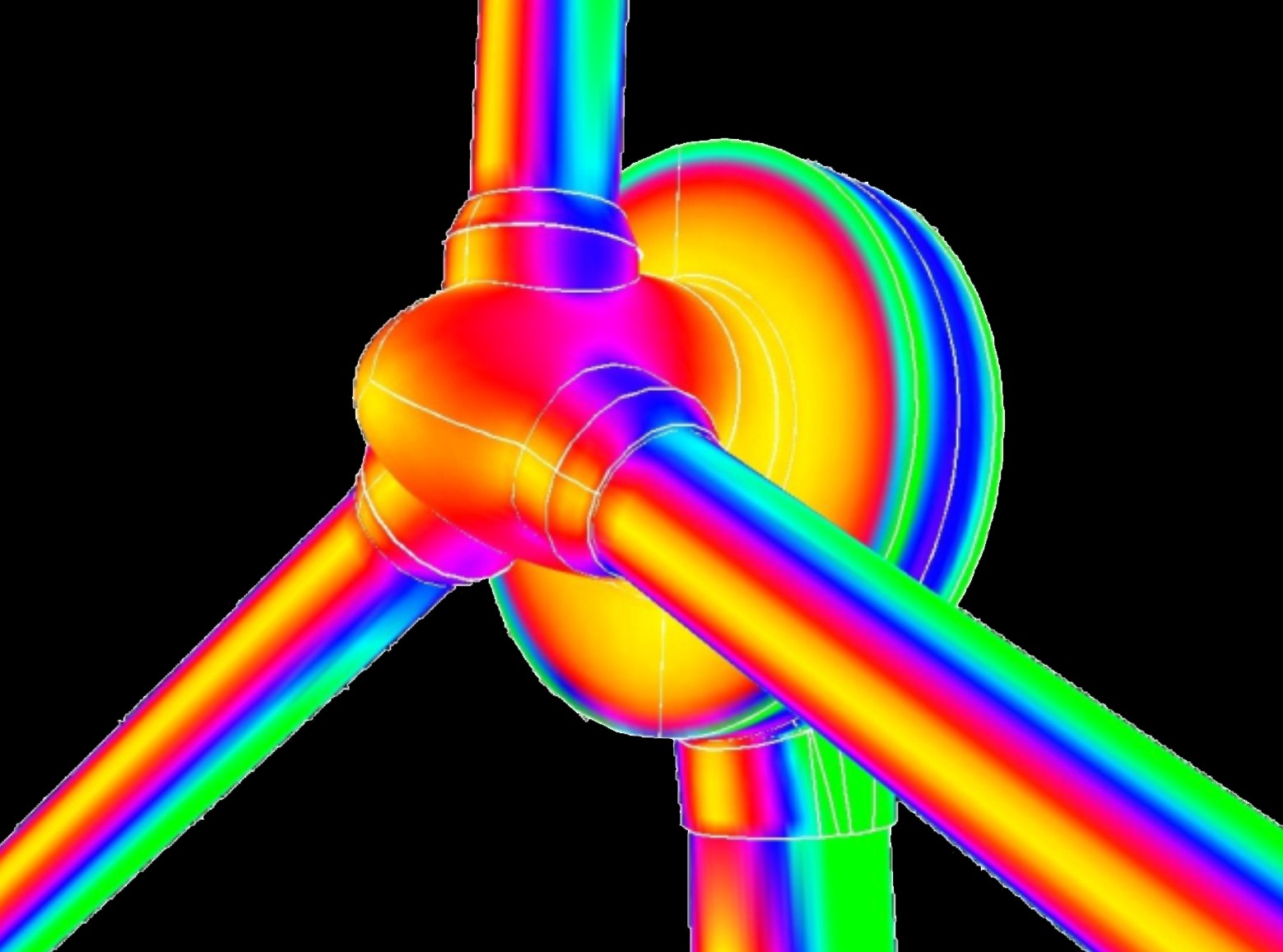
This project was carried out in two phases. Initially, the flow around the turbine was simulated using CFD (Computational Fluid Dynamics) calculations, also taking the rotation of the turbine blades and the hub into account. The static pressure along the surface of the system was calculated from the results of the flow simulations. Ventilation openings were planned in regions where the lowest static pressure occurred for all operating states. By specifically choosing the position of these openings and a ventilation inlet at the lower end of the tower, a maximum pressure difference, and thus a maximum cooling air volume flow, could be generated.
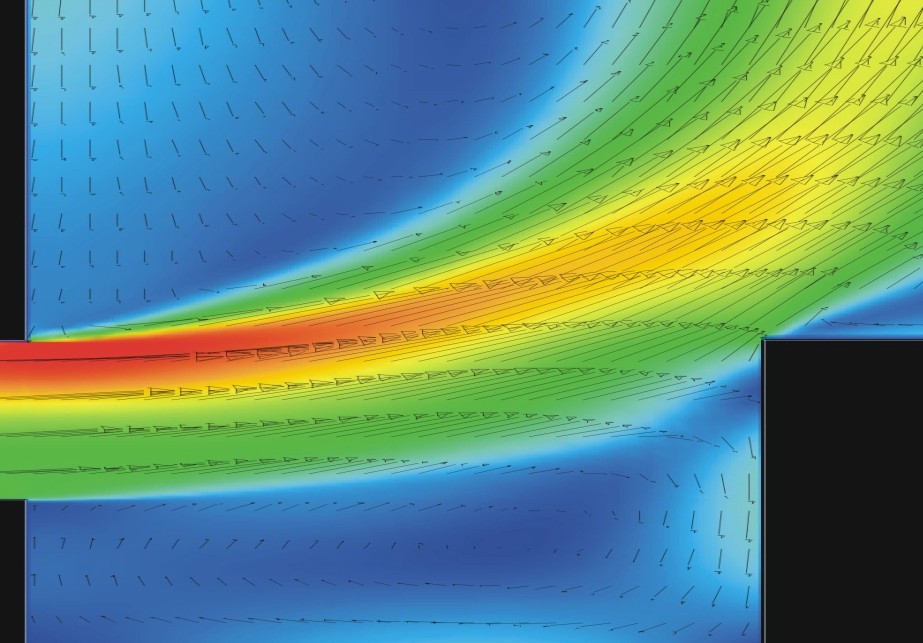
In the second part of the project, the pressure difference calculated in the first part between the two ventilation openings was used as a boundary condition for simulating the flow and temperature distribution inside the tower and hub, including all components. The chimney effect of the tower was also considered in this part of the project.
Analysis of the simulation results revealed an extremely complex flow pattern. However, by installing baffles, the flow could be redirected in such a way that the components did not exceed their critical temperatures, thereby ensuring operational safety for all weather conditions using passive cooling.