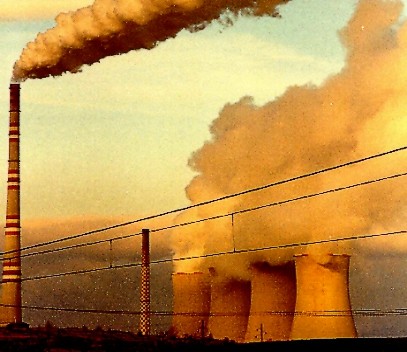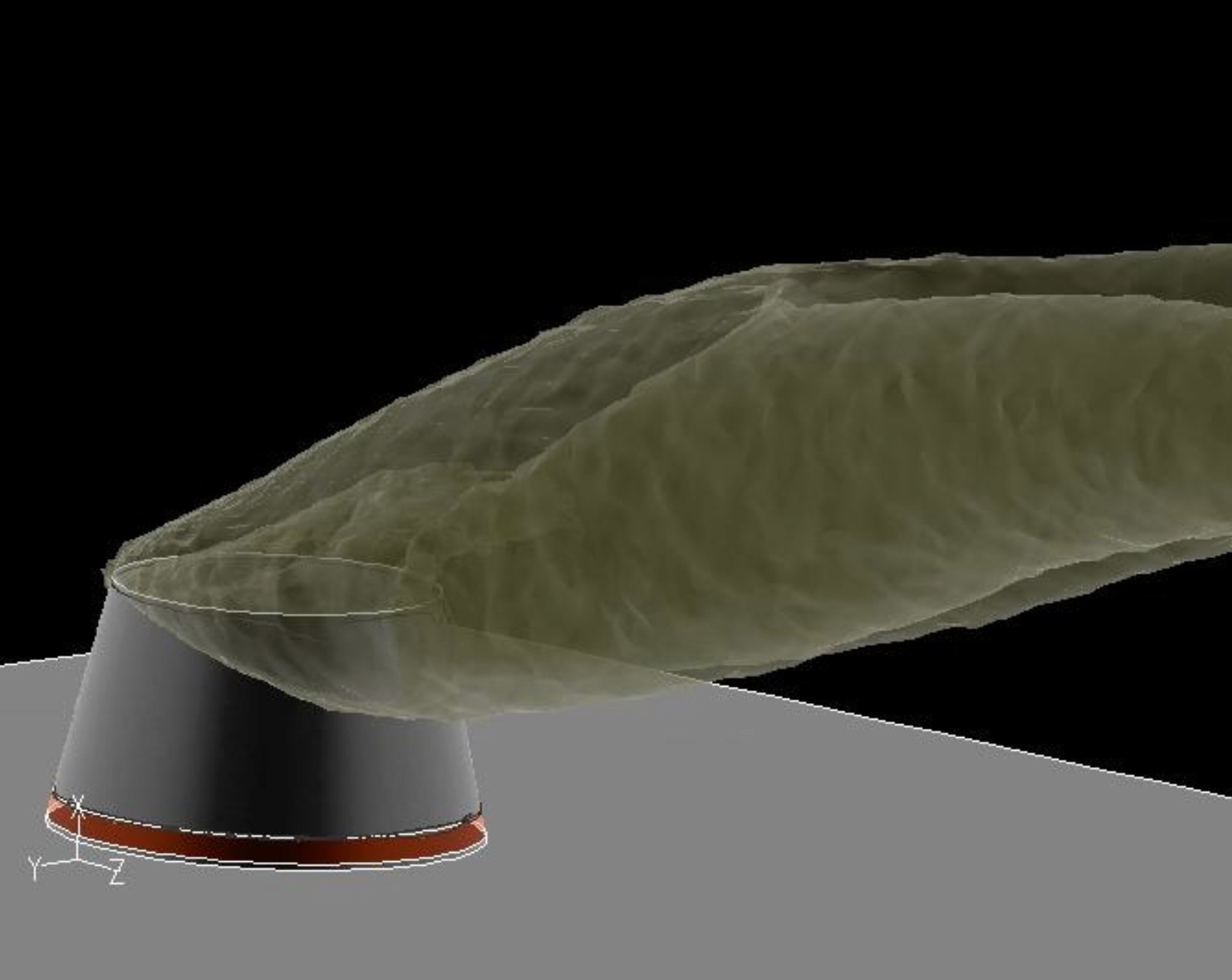
Cooling towers discharge warm, humid air into the atmosphere. The water vapour itself is invisible, but as the plume mixes with colder ambient air, part of the vapour can condense into small droplets and form a visible mist or condensation plume.
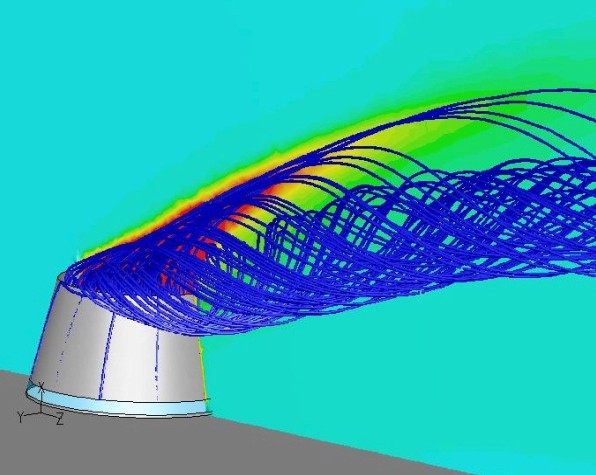
FlowMotion used CFD to analyse the dispersion of the cooling-tower exhaust under different atmospheric conditions. The calculations included the interaction between the warm humid plume and the surrounding wind field.
The local velocity, temperature and moisture fields determine where the plume travels and under which conditions condensation can occur. Wind direction, wind speed, atmospheric stability and the thermal and moisture content of the exhaust can all influence the extent and position of the visible plume.
The simulations made it possible to assess the plume behaviour around the cooling towers and their surroundings for relevant weather conditions.
This provides a physical basis for evaluating potential visibility effects and the interaction of the plume with nearby structures or areas.