Industrial compressors release large quantities of heat to their surroundings. In a compressor hall, sufficient ventilation capacity is essential, but the total volumetric flow alone does not determine whether all equipment is cooled effectively.
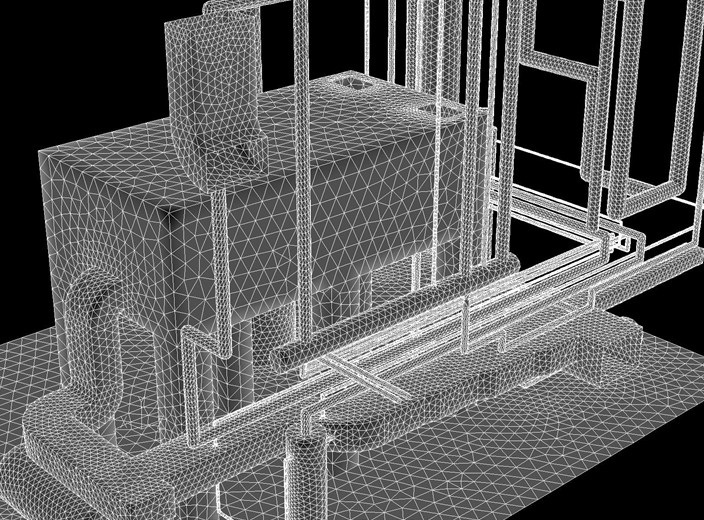
FlowMotion used CFD to analyse the three-dimensional airflow and temperature distribution in the hall. The model included the main heat sources, supply and extract openings and the flow-relevant geometry around the compressors.
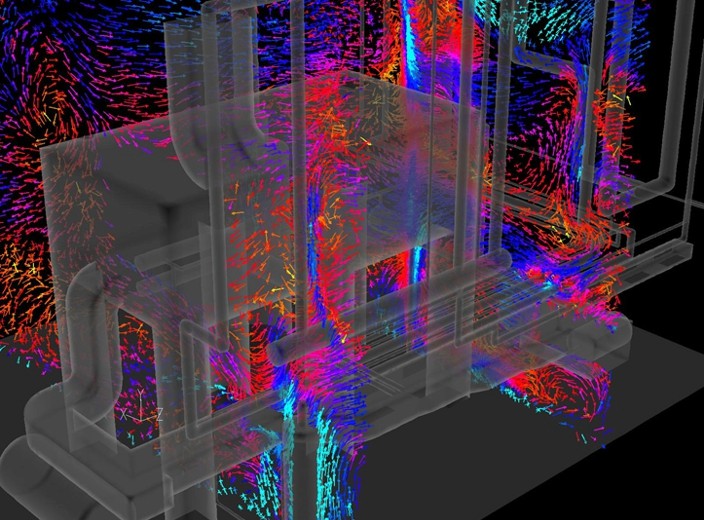
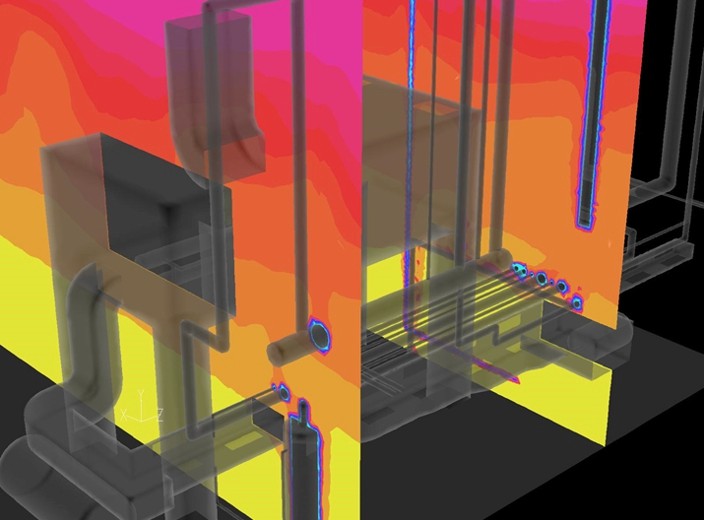
The calculations showed how cooling air was distributed between the machines and where warm air accumulated or recirculated. Temperature-dependent density differences generated buoyancy and natural convection, which can strongly influence the flow pattern in a large industrial space.
Different ventilation configurations were compared using local velocities and temperatures as well as the overall airflow. This made it possible to improve the position and distribution of supply and extract air rather than simply increasing fan capacity.
The resulting design used the available ventilation air more effectively and reduced the risk of local overheating.