Oil transport through pipelines at low temperatures can involve strong interactions between pressure, temperature, density and viscosity. As the fluid cools, its properties change, which in turn affects the pressure loss and flow behaviour along the pipeline.
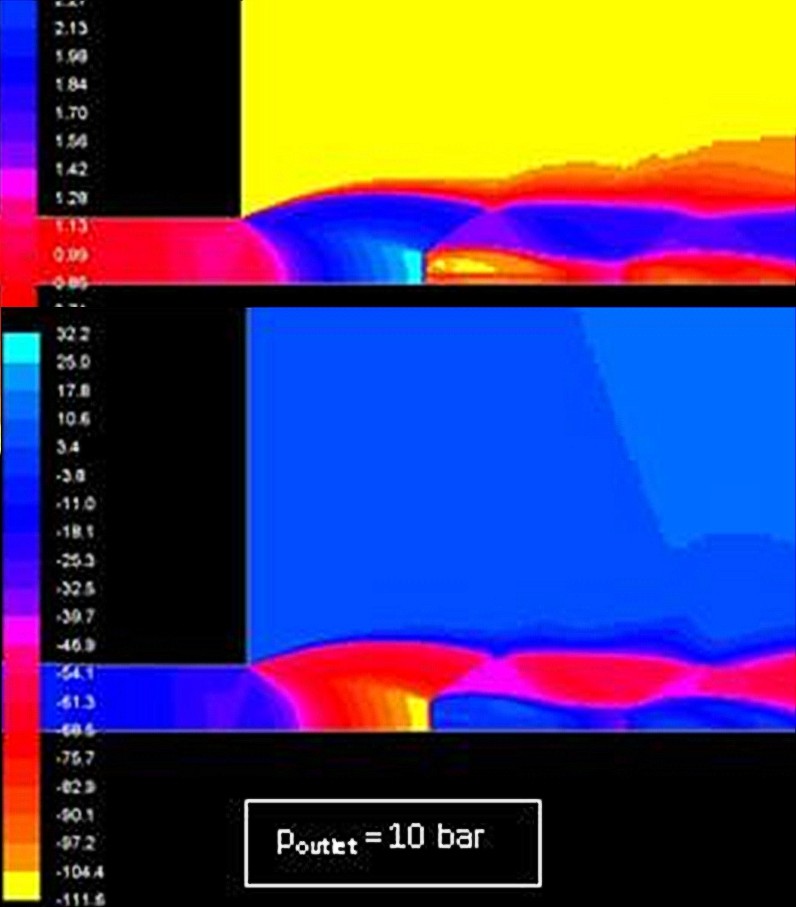
FlowMotion used CFD to analyse a cold pipeline flow in which these coupled effects were important. The calculations included heat transfer between the fluid, the pipe wall and the surroundings, together with the resulting changes in fluid properties.
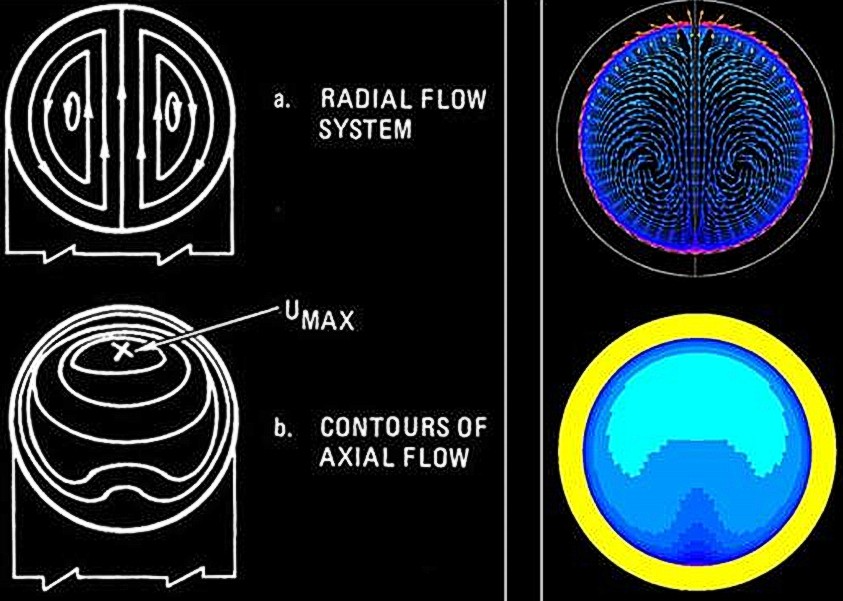
Where compressibility is relevant, pressure and density are also coupled. A reliable prediction therefore requires more than a simple incompressible pressure-drop calculation: the pressure, density, temperature and local velocity fields must be solved consistently.
The simulations were used to assess the development of the flow and temperature along the pipeline and to validate the engineering calculations used for the system.
This provided insight into the conditions governing pressure loss and transport performance under cold operating conditions.