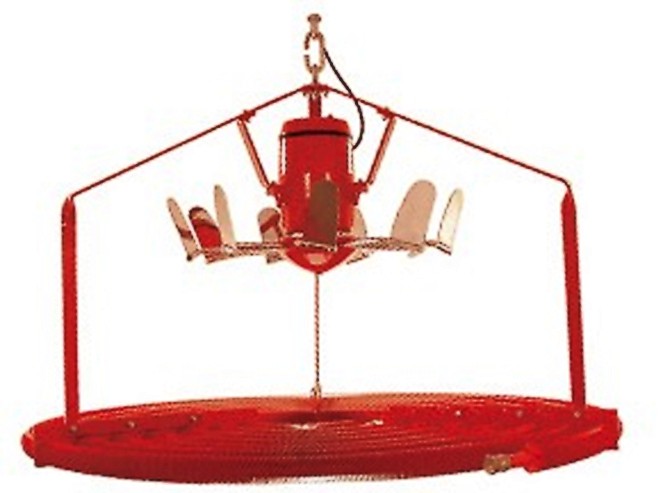
A ceiling fan is intended to move a large volume of air at relatively low pressure rise. Its performance therefore depends strongly on blade geometry, rotational speed and the interaction between the fan and the surrounding room air.
FlowMotion analysed an existing ceiling fan using CFD and measurements. The objective was to increase the volumetric flow rate without simply increasing rotational speed or power consumption.
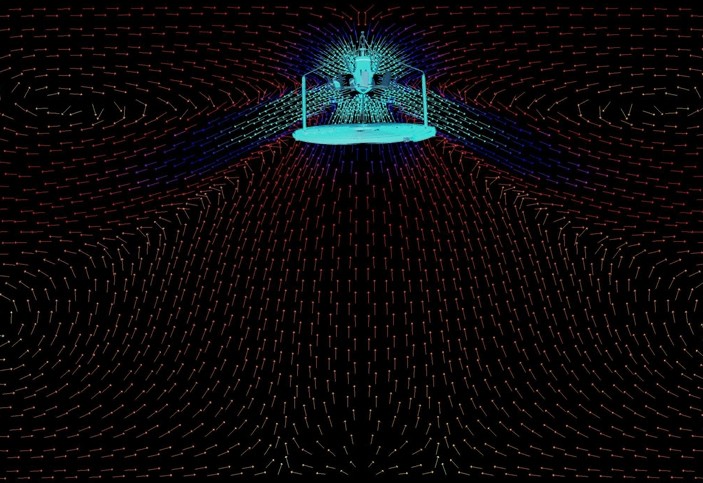
The CFD simulations showed the three-dimensional velocity and pressure fields around the blades and identified aerodynamic losses associated with the original geometry. Different blade modifications could then be evaluated numerically.
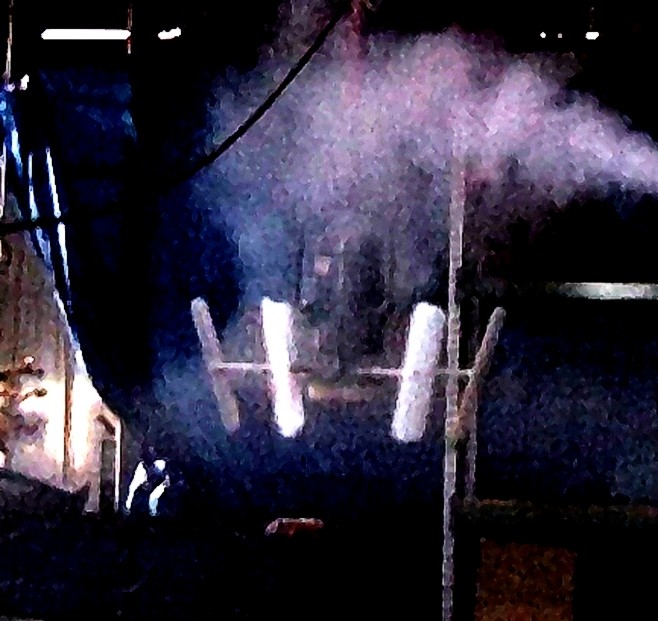
Measurements were used to verify the resulting fan performance. By combining simulation and experiment, the design could be improved in a targeted manner.
The resulting concept achieved a substantially higher volumetric flow rate, demonstrating how detailed aerodynamic optimisation can improve even a seemingly simple and mature product such as a ceiling fan.