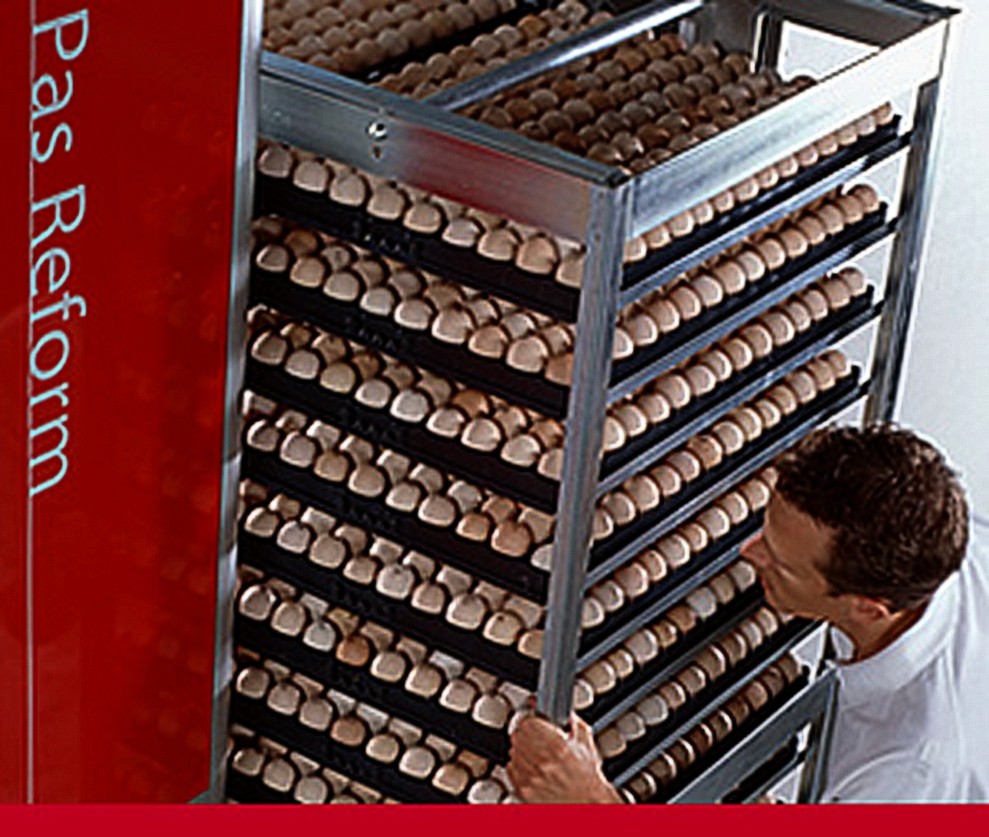
In chicken farming, ‘incubators’ are used at the outset, where thousands of eggs are monitored until the chicks hatch. During this time, heat must initially be supplied to the eggs and subsequently removed. Therefore, controlling the climate inside the incubator plays a special role; temperature distribution and air exchange must be precisely controlled and continuously adapted to the needs of the eggs. To maximise yield, only a temperature difference of a few tenths of a degree is permissible throughout the growth period. CO2 concentration, as well as the velocity of air passing the eggs and chicks, must also be accurately adjusted. The core component of the incubator is the ‘pulsator’.
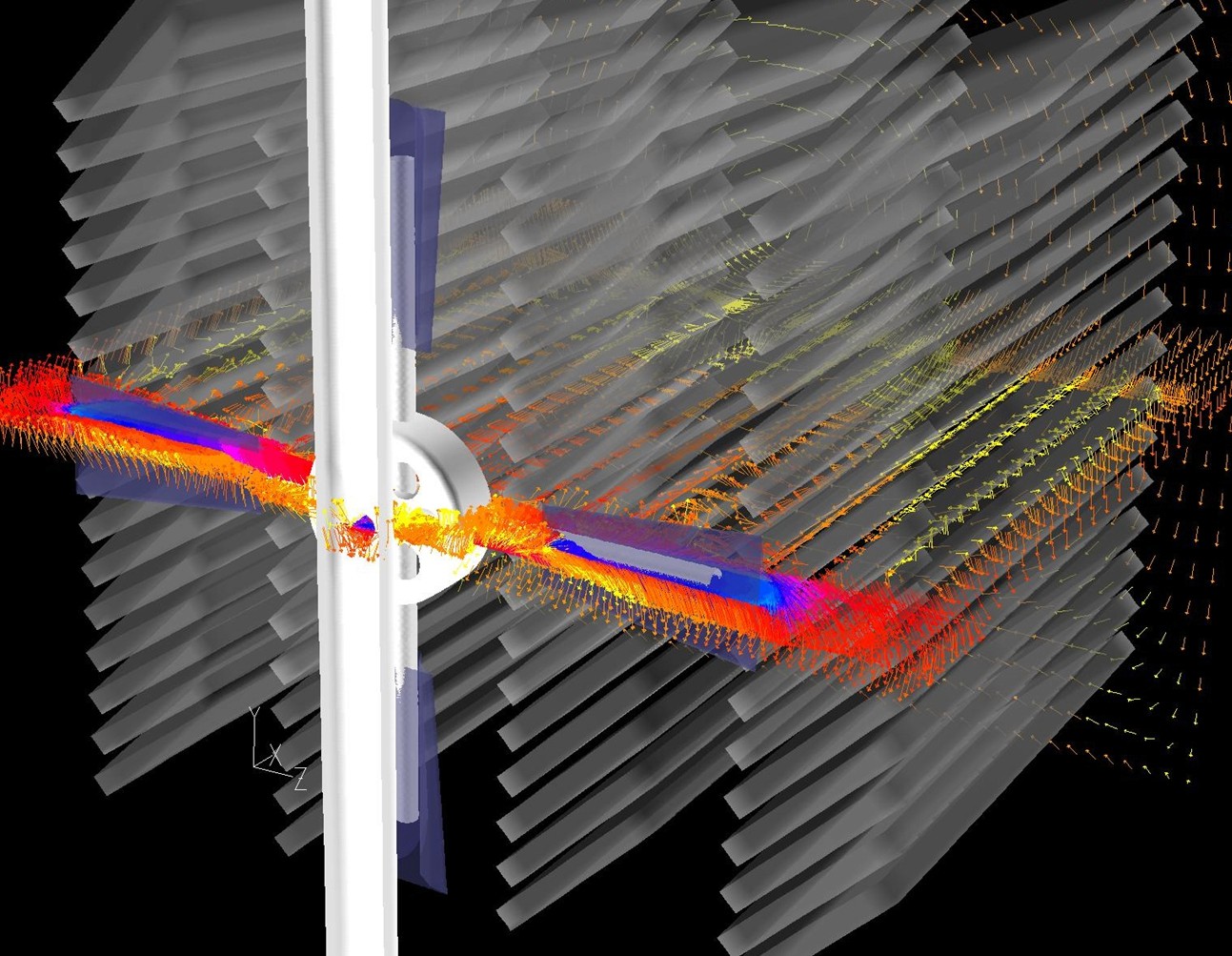
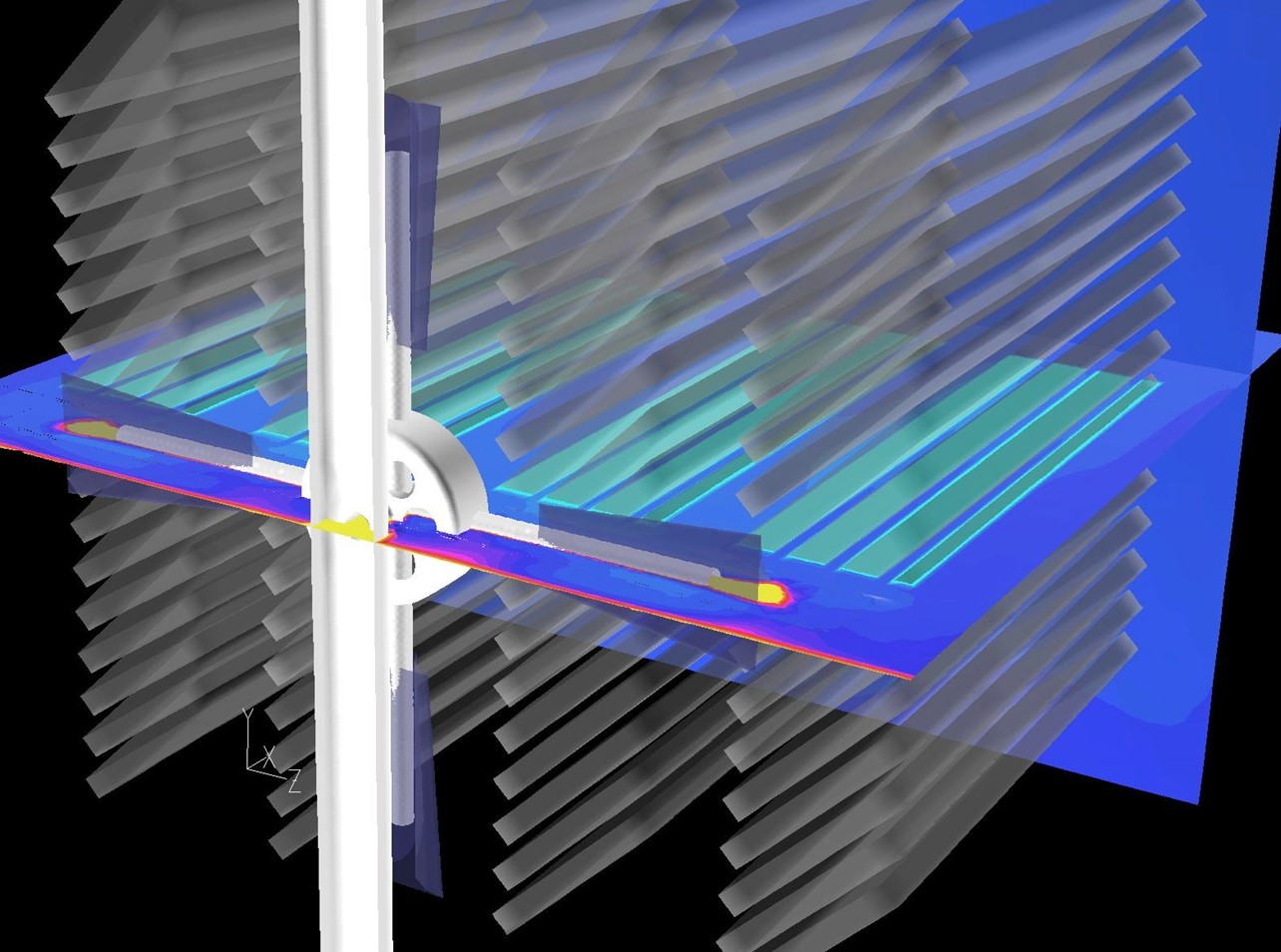
The pulsator is characterised by a highly complex airflow, as air is drawn in through the hub and four radial tubes, with the pulsator blades serving to distribute the air. For the further development of these incubators, FlowMotion was commissioned to analyse the flow and heat transport between the eggs and the moving air in detail. Experimental investigation was not conducted for two primary reasons: firstly, the interior of the incubator is difficult for measurement probes to access under operating conditions, and secondly, an enormous number of measurement points would have been required to describe the flow and temperature field with sufficient accuracy. For this reason, CFD (Computational Fluid Dynamics) simulations were employed.
The operation of the pulsator was fully mapped in the computer model. The results of the simulations corresponded with practical experience and spot measurements with very high accuracy, serving as an essential prerequisite for the next stages of development. The simulations clearly demonstrated the complexity of the interaction between the shape of the pulsator blades and the resulting velocity and temperature distribution.