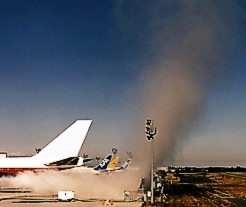
Aircraft engines produce high-velocity, high-temperature exhaust jets during ground operation. A blast deflector must redirect this flow safely while limiting the aerodynamic and thermal loads on nearby structures and equipment.
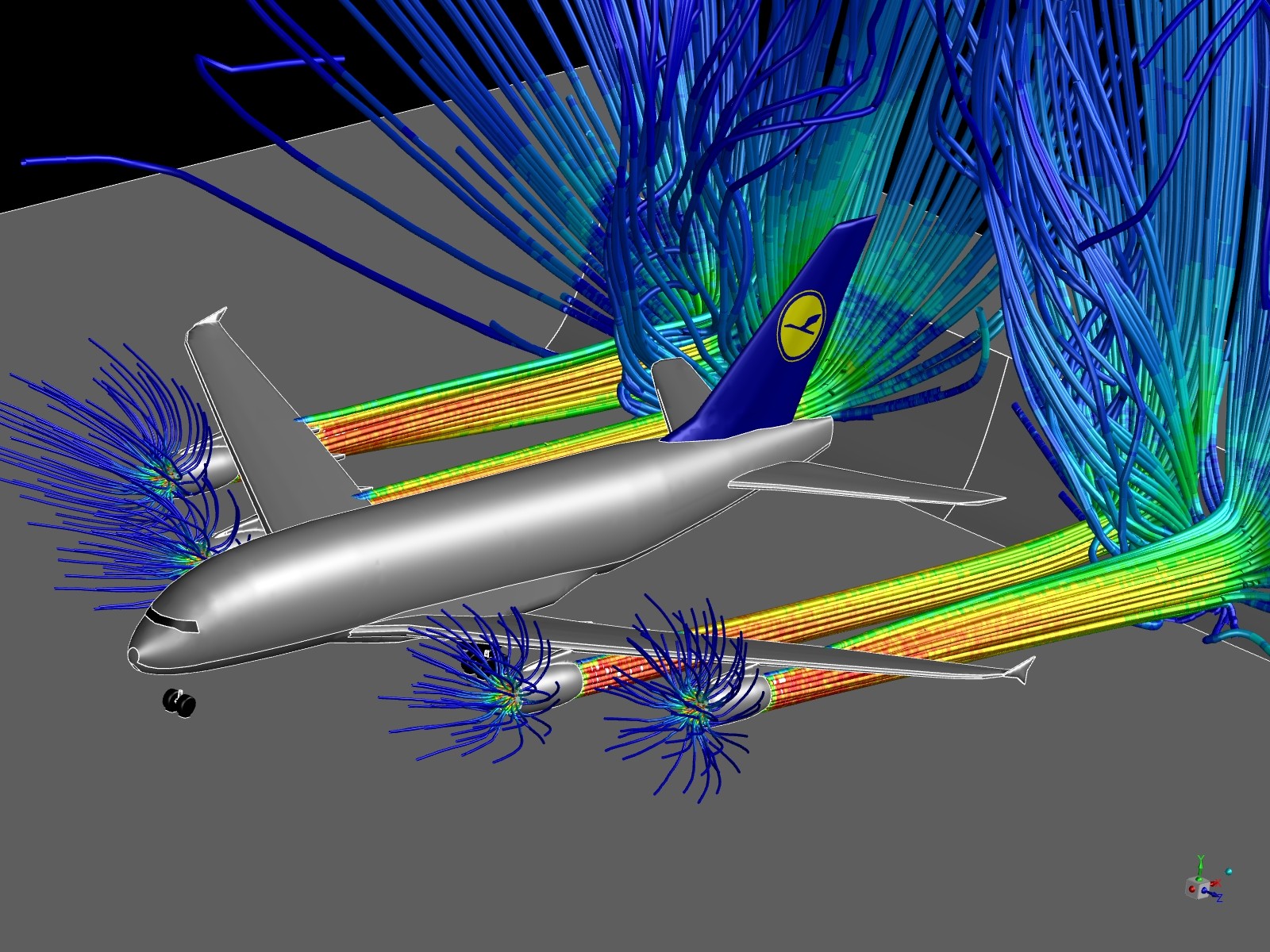
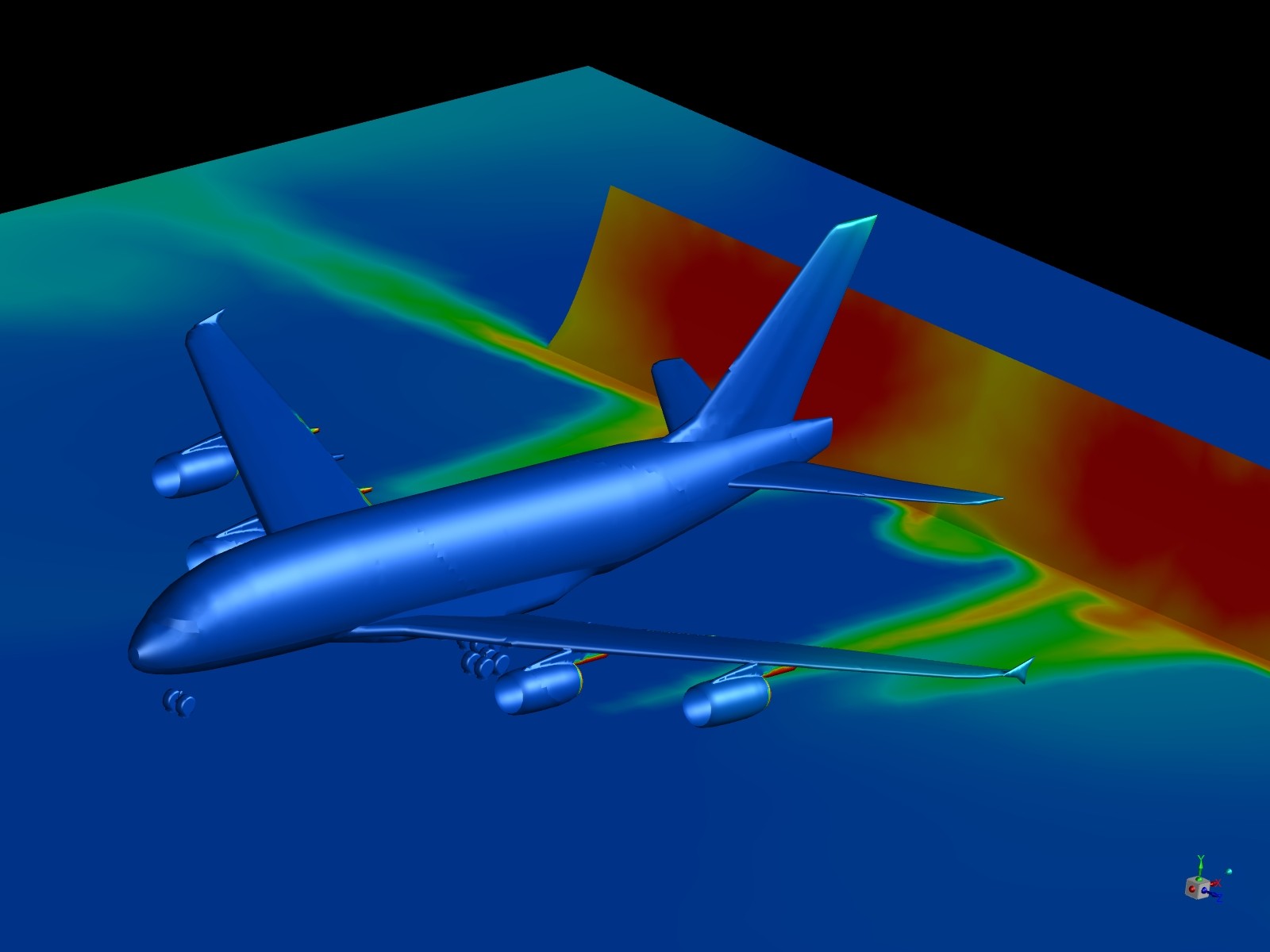
FlowMotion used CFD to support the development of an aircraft blast deflector. The simulations calculated the three-dimensional velocity, temperature and static-pressure fields in the exhaust jet and around the deflector.
The interaction between the jet and the deflector creates strong changes in flow direction, local pressure loading and recirculation. These effects determine both the trajectory of the redirected exhaust and the aerodynamic forces acting on the structure.
Different geometries could be compared by examining the resulting flow field, pressure distribution and thermal exposure. This made it possible to improve the deflector shape before full-scale construction or testing.
The CFD analysis therefore provided a direct link between exhaust-flow behaviour and the practical design loads on the blast-deflector system.